
Last updated October 30, 2026
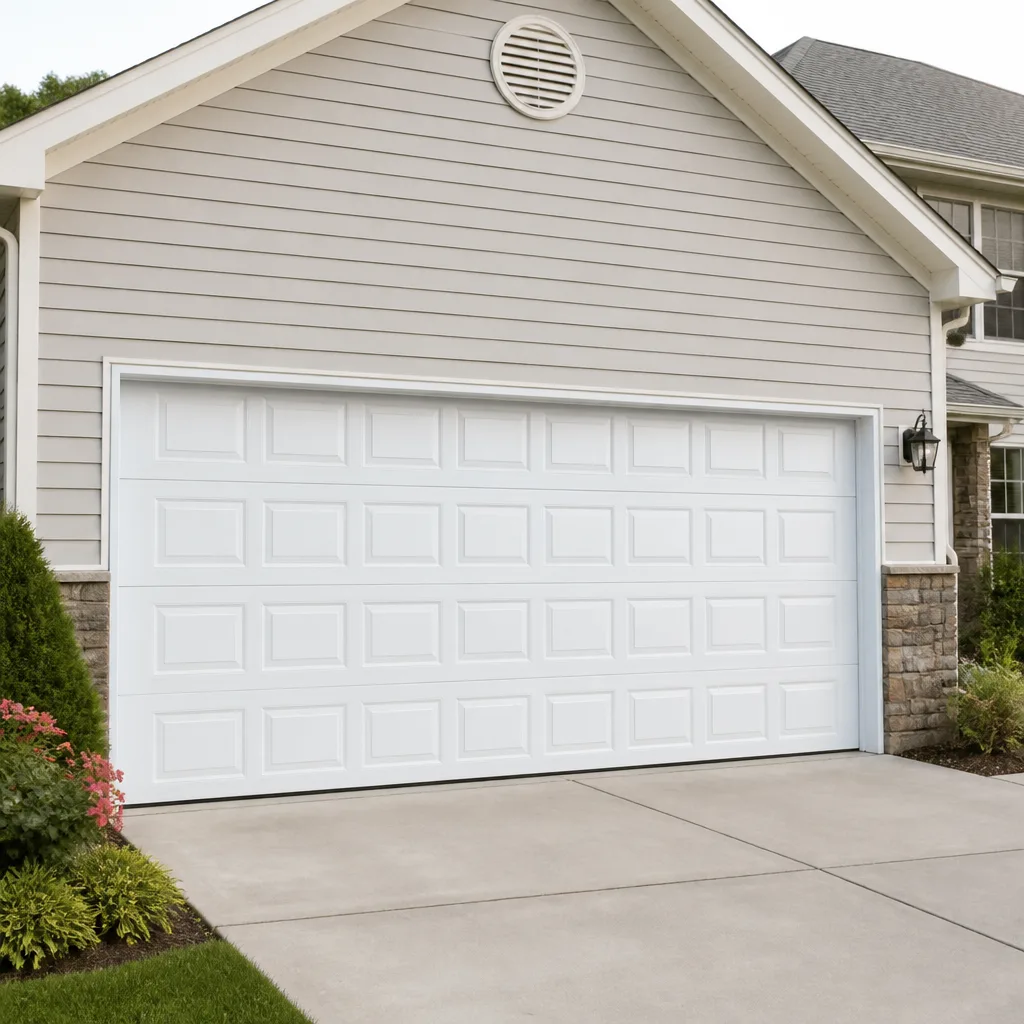 Raised-panel steel
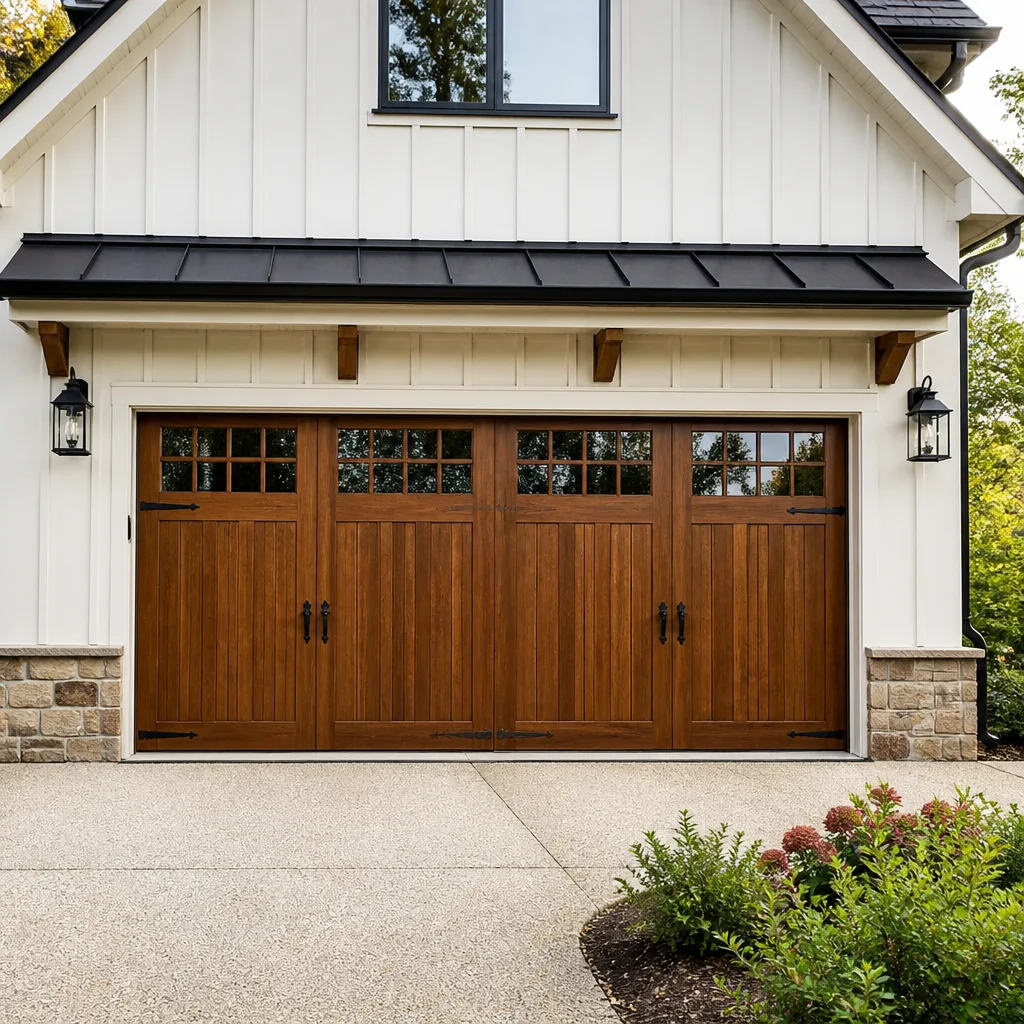 Carriage house
 Modern flush
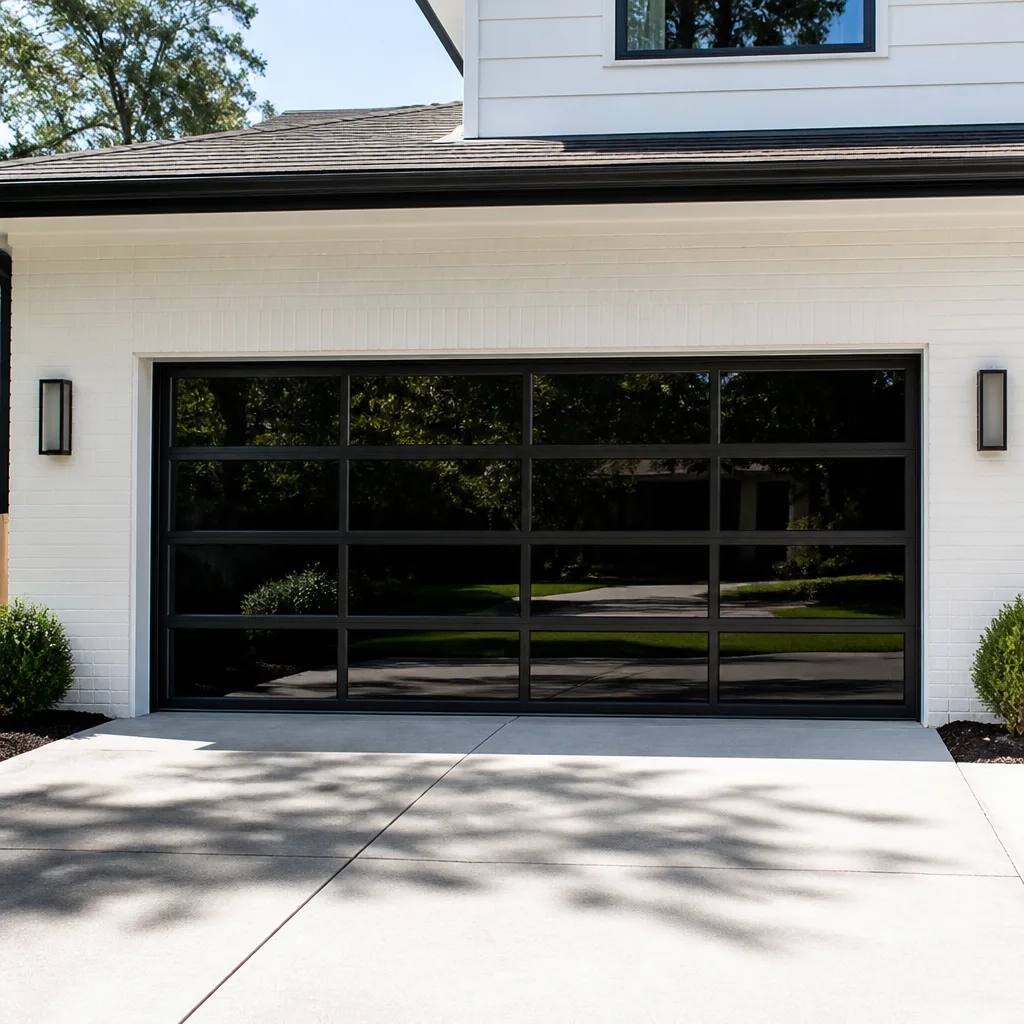 Full-view glass
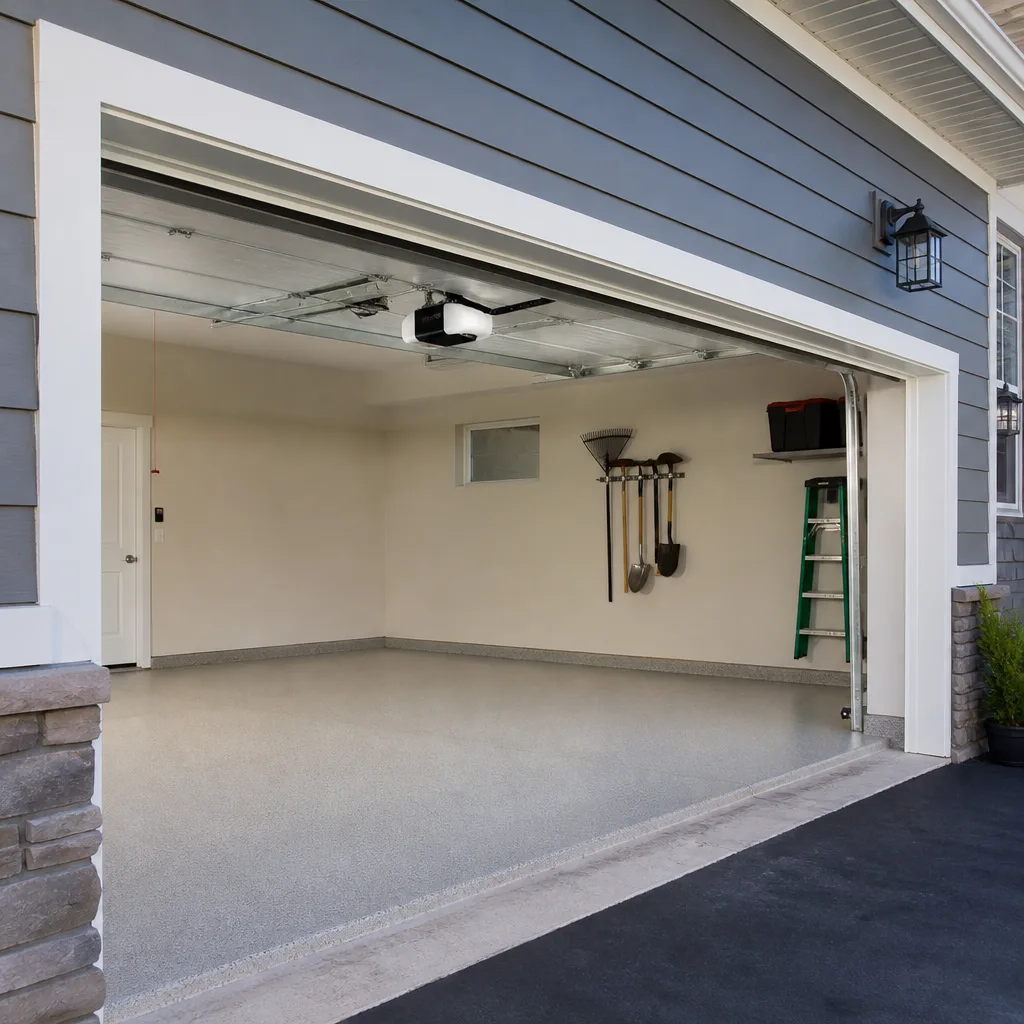 LiftMaster openers
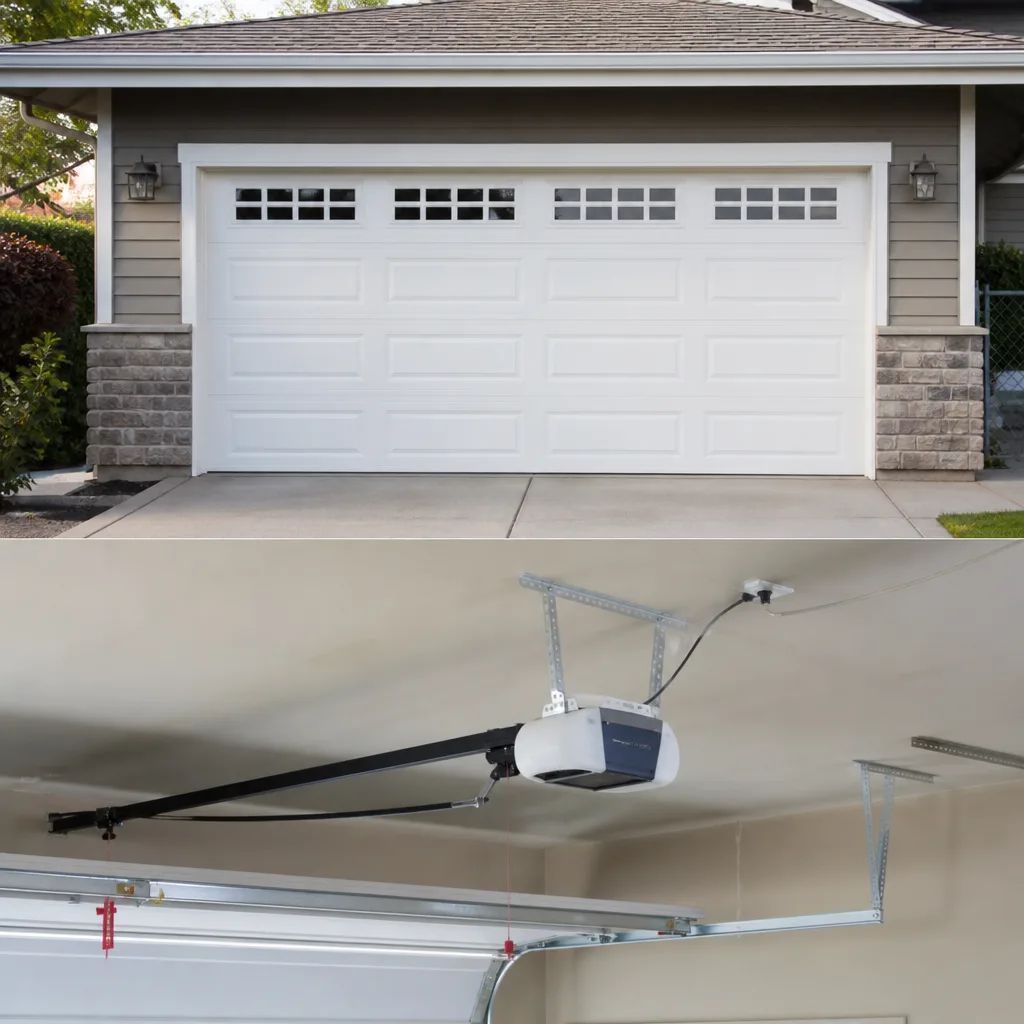 Chamberlain openers
Full 25-point door and opener safety check with every visit - springs, cables, rollers, tracks, and your LiftMaster or Chamberlain opener included
You get a price before we start. It does not change when the truck arrives.
Get your free estimateGarage Door Emergency Preparedness Guide for Anaheim Homes
During a power outage, most Anaheim homeowners don’t know their garage door has a manual release, and pulling the wrong cord at the wrong moment can drop 200 pounds of door instantly. That’s not a scare tactic. It’s what happens when a torsion spring holds tension and someone yanks the red handle without understanding what it does. This guide walks through the emergencies specific to Anaheim: earthquake track damage, Santa Ana wind outages, and doors stuck in the down position overnight. For more guides & resources, see our blog. You’ll learn what to do in the first ten minutes, what to check before touching anything, and when to call a garage door specialist who knows the system in your garage.
Quick Answer
Garage door emergency preparedness in Anaheim means three things: knowing how to operate your door’s manual release safely, having a plan to secure the door when it won’t close, and knowing which failures are safe to wait on versus which need a technician the same day. See our full Garage Door Repair Troubleshooting: Common Problems and How to Fix Them for non-emergency issues. Earthquakes and Santa Ana wind outages create specific failure patterns here that most generic garage door advice never covers. We work on every major brand installed in Anaheim garages, from LiftMaster openers to Clopay doors, and this guide is built from what we see in the field.
Styles & brands we work with
Table of Contents
- How to Use the Manual Release Without Dropping the Door
- Post-Earthquake Inspection Protocol for Anaheim Homes
- How to Temporarily Secure a Door That Won’t Close
- Battery Backup Openers: What’s Worth It in Anaheim
- Power Outage Protocol During Santa Ana Wind Events
- Emergency vs. Standard Malfunction: Who to Call and What to Tell Them
- Preventive Steps That Reduce Emergency Calls
How to Use the Manual Release Without Dropping the Door
The manual release on a garage door opener is a red cord hanging from the opener rail, usually near the motor unit. When pulled, it disconnects the door from the opener carriage, letting you operate the door by hand. The dangerous part is pulling that cord when the door is up and the spring is under tension that you can’t see. If the spring is broken, the door will come down fast. If the spring is intact but you pull the release while standing on a ladder in the wrong spot, the door can still slam.
Before pulling the release, look at where the door is. If the door is closed, pull the release and then lift the door manually. If the door is open, do not pull the release without first supporting the door or checking whether the spring is intact. A door that’s open and has a broken spring will not stay up when you disconnect it from the opener.
- Close the door if possible. If you have power, run the opener to close the door before pulling the release. A closed door is the safest starting point.
- Pull the red cord straight down and toward the motor. This disengages the carriage. You should hear a click.
- Lift the door by its handle, not the panels. Use a firm grip on the bottom handle or the lift handle. Lift slowly. If the door feels heavy, stop. That usually means a broken spring.
- If the door won’t stay up on its own, get a second person or call for help. A door that falls when you let go has a spring failure. Do not prop it open with a ladder or a tool. The door weighs 150 to 250 pounds, and a prop that slips turns into a serious injury.
In Anaheim, we see a lot of manual release failures after earthquakes knock the opener’s carriage out of alignment. The release works, but the door won’t reconnect to the carriage afterward because the track shifted. That’s a technician call, not a DIY fix. Reconnecting a door to a misaligned carriage while standing on a ladder with a live opener nearby is how people lose fingers.
Post-Earthquake Inspection Protocol for Anaheim Homes
Anaheim sits on several active fault lines, including the Whittier and Puente Hills faults. A moderate quake, even a 4.0, can shift garage door tracks, knock rollers out of alignment, or crack a panel. Most of that damage is not visible from inside the garage at night. Here’s the inspection order we recommend before you run the opener after any quake strong enough to rattle dishes:
- Look at the door from outside, twenty feet back. Is it level? A door that hangs lower on one side has track or spring damage. Do not open it.
- Check the vertical tracks on both sides. Look for gaps between the track and the wall. If a track pulled away from the wall, the rollers can jump out when the door moves.
- Look at the horizontal track where it meets the ceiling. Check the bolts and brackets. After a quake, these are the first points to loosen.
- Inspect the springs. If you have a torsion spring above the door, look for a visible gap in the coil. If you have extension springs on the sides, look for a stretched or separated spring. A broken spring after an earthquake is common, especially on older doors.
- Run the opener once, with the remote, standing outside the garage. Listen. A grinding or popping sound means something shifted after all. Stop the door halfway and look at both sides again.
What’s invisible after a quake: hairline cracks in the panel’s inner steel, a roller that bent slightly but hasn’t jumped yet, a spring that lost tension without fully breaking, and an opener’s logic board that got jolted into a fault state. Those failures show up days later. If your door made it through a quake but starts acting strange within a week, moisture and temperature swings in Anaheim’s dry air can make those micro-failures worse. We regularly see doors that pass a visual check but fail the moment they’re under load.
How to Temporarily Secure a Door That Won’t Close
A garage door stuck open at midnight is a bigger security problem in Anaheim than a door stuck closed. The garage is the most common entry point for property crime, and an open door advertises everything inside. If your door fails in the open position, you need to secure the opening before morning. Here’s how, from inside the garage and from outside if you can’t get in.
From inside the garage:
- Pull the manual release and lower the door by hand if the spring is intact. If the spring is broken, you’ll need two strong adults to lower a 200-pound door slowly. One person on each side, hands on the bottom brackets, lowering in sync. Not on the panels themselves, which can pinch fingers if the sections fold.
- If you can’t lower it, place a solid object under the opening that can’t be moved: a heavy workbench, a loaded toolbox on wheels with the wheels locked, or a vehicle parked tight against the door opening. This doesn’t replace a closed door, but it blocks the access point.
- Disable the opener by unplugging it from the ceiling outlet. A door that’s stuck open and still has power to the opener is a door that could activate unexpectedly and drop.
From outside the garage:
- If you’re locked out and the door is stuck open, park your car so the bumper touches the garage opening. It’s not elegant, but it blocks entry and buys time until a technician arrives.
- Ask a neighbor to keep an eye on the garage if you must leave. In Anaheim’s denser neighborhoods, a visible open garage with a car in it is enough to deter most opportunistic theft.
- Call a garage door specialist. Not a general handyman. A door stuck open with a broken spring needs a spring replacement with the right torsion, and that’s a specific job with specific tools. We’ve seen handymen replace springs with the wrong size and create a door that’s more dangerous than the original failure.
If the door is stuck closed and won’t open, the security problem is smaller but the transportation problem is real. Most Anaheim homes use the garage as the primary entry and exit. A door that won’t open traps a car inside. Don’t force it. Forcing a stuck door often bends the track or strips the opener gear, turning a $200 repair into an $800 one. Call instead. Our garage door repair service in Anaheim handles stuck doors, broken springs, and track damage the same day, and we work on the brand already in your garage.
Battery Backup Openers: What’s Worth It in Anaheim
Anaheim’s outage profile is specific: most outages happen during Santa Ana wind events in fall and early winter, when utility companies shut off power or lines go down. Outages are usually short, four to twelve hours, but they hit whole neighborhoods at once. If you’re home when the power drops and your opener has no battery backup, you can use the manual release. If you’re not home, a garage door with no backup is either stuck closed, which is inconvenient, or stuck open, which is a security gap.
A battery backup opener runs the door through the motor, not manually, for a limited number of cycles during an outage. LiftMaster and Chamberlain both make solid backup units, and Genie has models with integrated batteries that are clean installs. The units worth buying in Anaheim are the ones with a DC motor inside, because DC openers draw less current, which means the battery lasts longer and the open and close speeds are softer. That softer start and stop also reduces wear on the door’s hinges and rollers.
What to look for in a backup system:
- Rated cycles. A good backup gives you 20 to 30 open and close cycles before it needs a recharge. That’s enough for two to three days of normal use in a family home.
- Recharge time. The battery should recharge fully in 24 to 48 hours once power returns. Some cheaper units take a week.
- Audible alert. A unit that beeps when it’s running on battery prevents the surprise of a dead battery when you actually need it.
- Compatibility with an existing opener. If you have an older opener, retrofitting a battery may not be possible without replacing the whole unit. We see this most often with early 2000s openers in Anaheim’s older neighborhoods, like the tracts around Modjeska Park and the houses off Lincoln Avenue.
If you’re replacing an opener anyway, bundling battery backup into the new unit is cheaper than retrofitting later. Our garage door opener repair in Anaheim covers existing units, but if your opener is a decade old and you want battery backup, we’ll tell you honestly whether repair or replace makes more sense. Garage doors are all we do, so we don’t have a reason to sell you a new opener you don’t need.
Power Outage Protocol During Santa Ana Wind Events
Santa Ana winds in Anaheim typically peak between October and February, and the strongest gusts hit foothill neighborhoods and canyons hardest. When the power goes out, the garage door opener is dead. But the door itself still works manually, and the most common mistake we see is homeowners who don’t know their door has a manual release at all, or who know it exists but have never practiced using it.
- If the door is closed when power drops: leave it closed. Every time you open it manually, you have to close it manually, and the manual operation puts wear on the tracks and rollers. If you don’t need the car, don’t open the door.
- If the door is open when power drops: decide whether you need it closed. If it’s daytime and you’re home, leaving it open is fine. If it’s evening or you’re leaving, close it manually using the release. Two people make this safer if the spring is old or the door is heavy.
- If you’re not home when power drops: accept that the door is stuck in whatever position it was in. No remote will open it. If it’s open, call a neighbor. If it’s closed, your car is trapped until power returns or you operate the door manually.
- Reset the opener after power returns. Most openers reset automatically, but some older Chamberlain and LiftMaster models need a manual reset by pressing the learn button for six seconds. If the remote doesn’t work after the power comes back, check the opener’s manual or call us.
One note specific to Anaheim: many homes here have wooden garage doors from the 1970s and 1980s that are significantly heavier than modern steel doors. A wooden door with a broken spring during a Santa Ana outage is a two-person job to close. We’ve seen homeowners below 5’6″ try to lower a heavy wooden door alone and end up with a door resting on their car’s roof. That’s not a repair we enjoy walking into.
Emergency vs. Standard Malfunction: Who to Call and What to Tell Them
Not every garage door problem is an emergency. Some failures can wait a day or two. Others can’t. Here’s how to sort them in Anaheim, where same-day service matters less than making the right call in the first place.
True emergencies, call immediately:
- Door stuck in the open position and you can’t close it. Security issue, especially overnight.
- Broken spring with the door up. The door is a falling hazard until the spring is replaced.
- Door came off its track. The door is unstable and could fall at any moment.
- Opener smoking, sparking, or smelling like burning plastic. Unplug it and call.
Standard malfunctions, schedule within a day or two:
- Door noisy but operational. That’s usually a roller or hinge issue that won’t fail catastrophically.
- Remote works intermittently. Likely a sensor or battery issue.
- Door opens but won’t close. Often a sensor alignment problem.
- Slow operation. Could be a worn opener gear or a door that needs balance adjustment.
When you call, describe the exact symptom, not your diagnosis. Say “the door is up and the spring is broken” instead of “the door is broken.” Tell the dispatcher the brand of your opener and door if you know it. In Anaheim, most people have LiftMaster, Chamberlain, Genie, or Clopay, and knowing the brand lets us load the right parts on the truck before we leave. Fast diagnosis, right parts.
Preventive Steps That Reduce Emergency Calls
Most Anaheim garage door emergencies are preventable with twice-a-year attention. Earthquake damage excepted, the failures we see follow predictable patterns: springs that were overdue for replacement, rollers that wore out and then seized, and openers that were never serviced after a decade of daily cycles.
Six preventive steps worth doing:
- Lubricate the rollers, hinges, and springs twice a year. Use a silicone-based or lithium-based garage door lubricant, not WD-40. WD-40 is a solvent that strips existing lubricant and leaves the parts dry. In Anaheim’s heat, dry rollers seize faster.
- Test the balance twice a year. Pull the manual release with the door closed, lift the door halfway, and let go. It should stay put. If it drops or rises, the spring tension is off and the opener is working harder than it should.
- Check the safety sensors every month. The photo eyes near the bottom of the track should align and show a solid light. If they blink, clean the lenses and check for dirt or spider webs. Anaheim’s dry climate means more dust settling on sensor lenses.
- Replace extension springs preemptively if they’re over eight years old. Torsion springs last longer, often twelve to fifteen years, but no spring lasts forever. A spring that breaks while the door is open is the most dangerous failure this system can have.
- Tighten track brackets and bolts after every significant earthquake. A loose bracket now is a derailed door later.
- If your opener is over fifteen years old, plan for replacement. Openers don’t fail gracefully. They fail the day you’re late for work. Newer openers from LiftMaster, Chamberlain, and Genie also have better encryption against code-grabbing attacks, which matters in Anaheim neighborhoods where theft from open garages is a known pattern.
When replacement does make sense, we recommend staying with the brand family you already know. If you have a Clopay door and a LiftMaster opener, replacing either with the same brand keeps the hardware matched and the warranty straightforward. We’re trained across eight major manufacturers including Amarr and Wayne Dalton, and we work on the brand already in your garage. That’s the difference between a technician who guesses and one who carries the right parts.
Common Mistakes to Avoid
- Pulling the manual release while the door is open without checking the spring first. A broken spring means the door drops the moment you release the carriage. This is how fingers get crushed and arms get broken.
- Propping a stuck-open door with a ladder, broom, or 2×4. A 200-pound door will knock props aside the moment the spring slips. Use blocks that can’t tip, or better, close the door properly.
- Using WD-40 on rollers and hinges. It displaces the grease that’s already there and leaves bare metal. Use a proper garage door lubricant instead.
- Ignoring a noisy door. A squeak or grind is a roller or hinge telling you it’s about to fail. In Anaheim’s dry heat, a seized roller can derail a door faster than most people expect.
- Calling a general handyman for spring or track work. Garage door springs carry lethal tension. A handyman who replaces a spring with the wrong diameter or winds it incorrectly has created a projectile that can kill. This is the one repair where “cheaper” and “safer” are never the same word.
- Assuming the opener is fine after an earthquake because the door moved. The door can operate for weeks after a quake with a bent roller or loose bracket before failing suddenly. If you felt the quake, inspect the door.
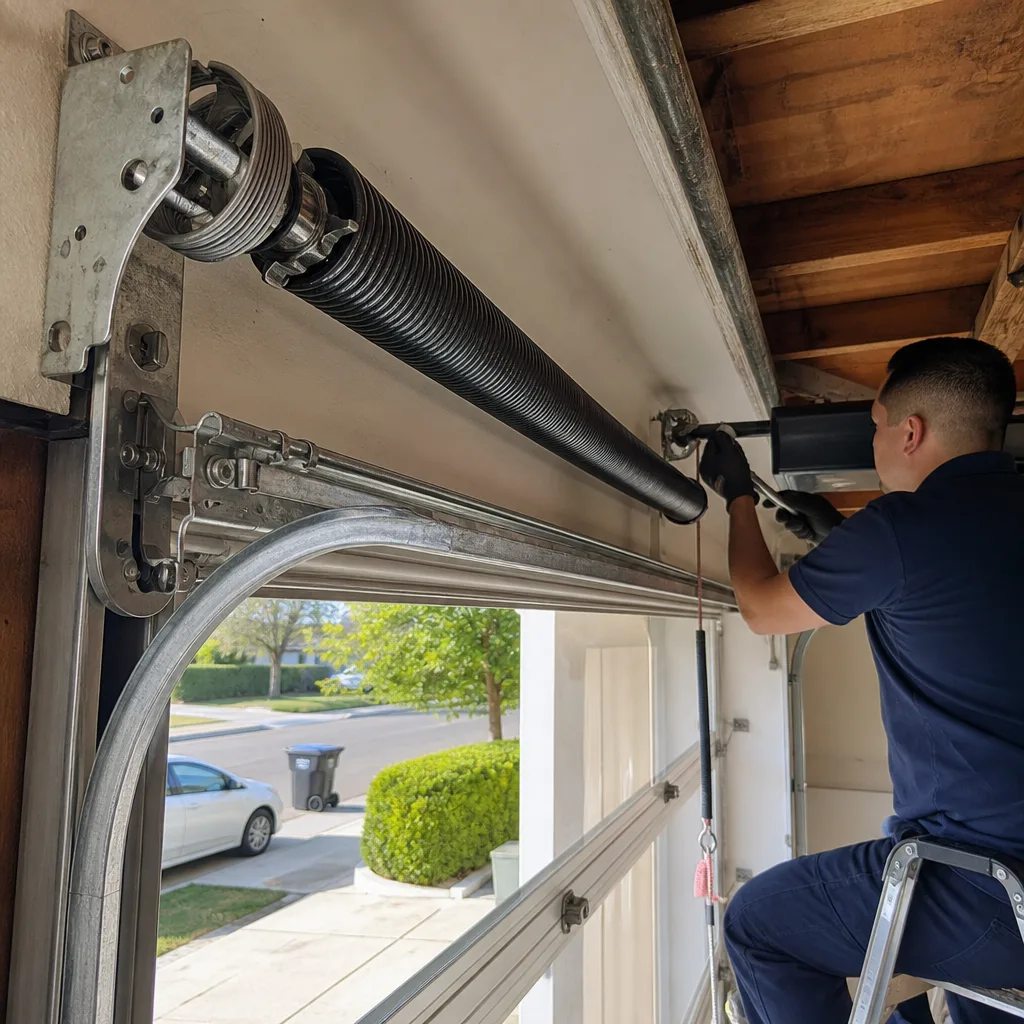
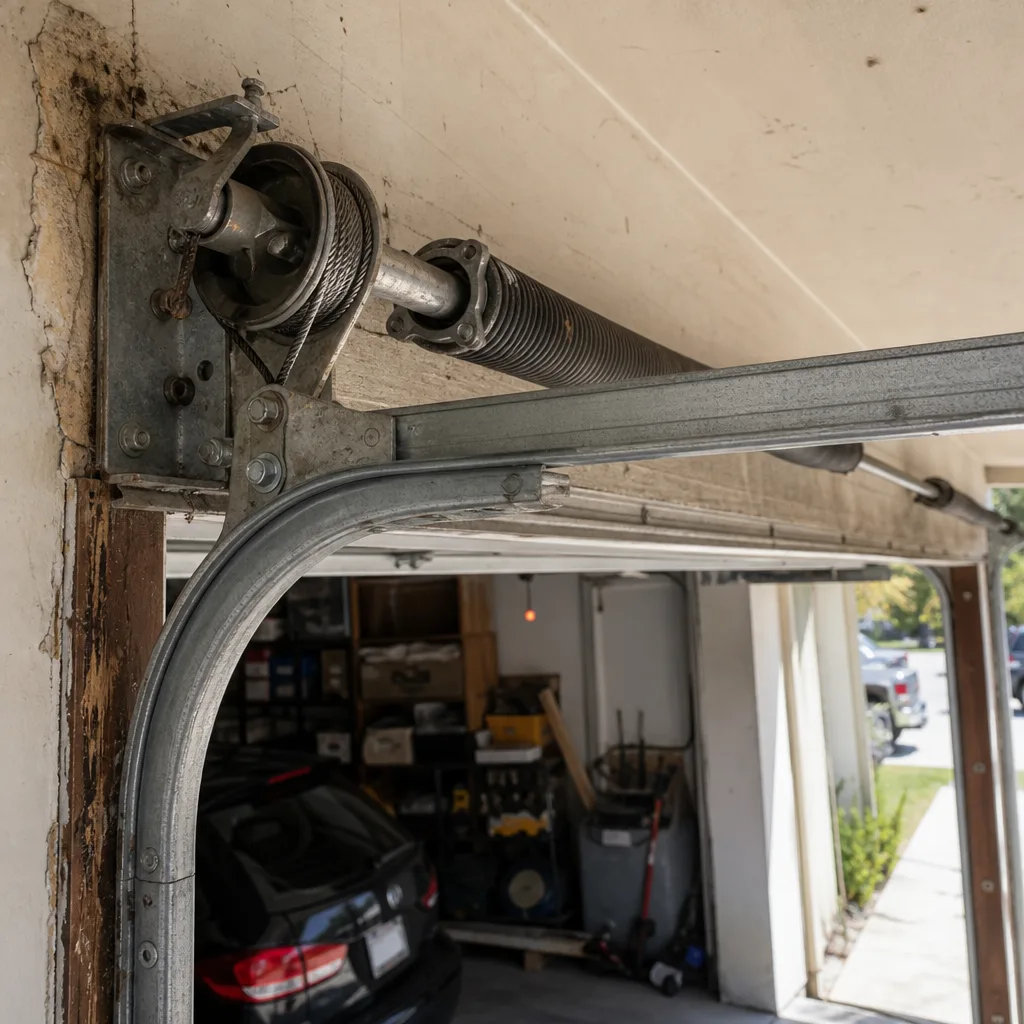
See the difference
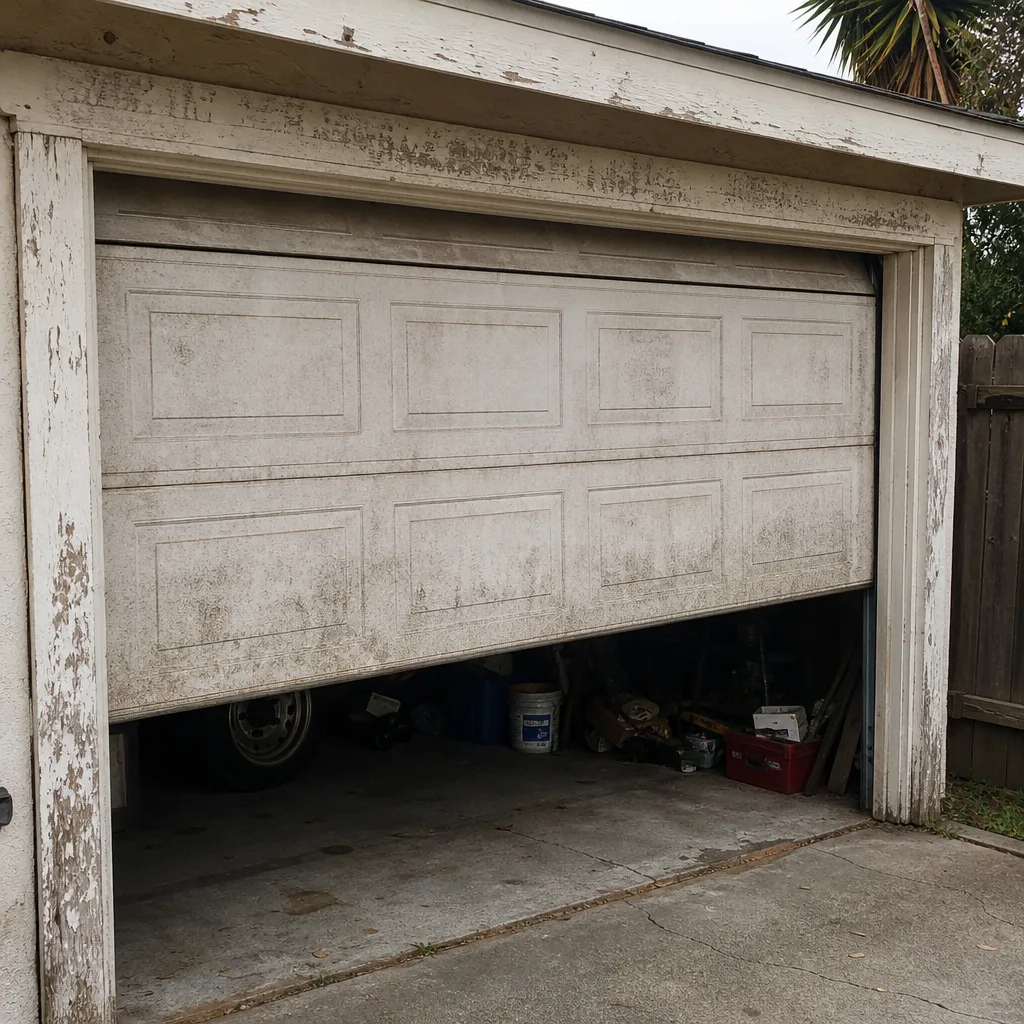 Before
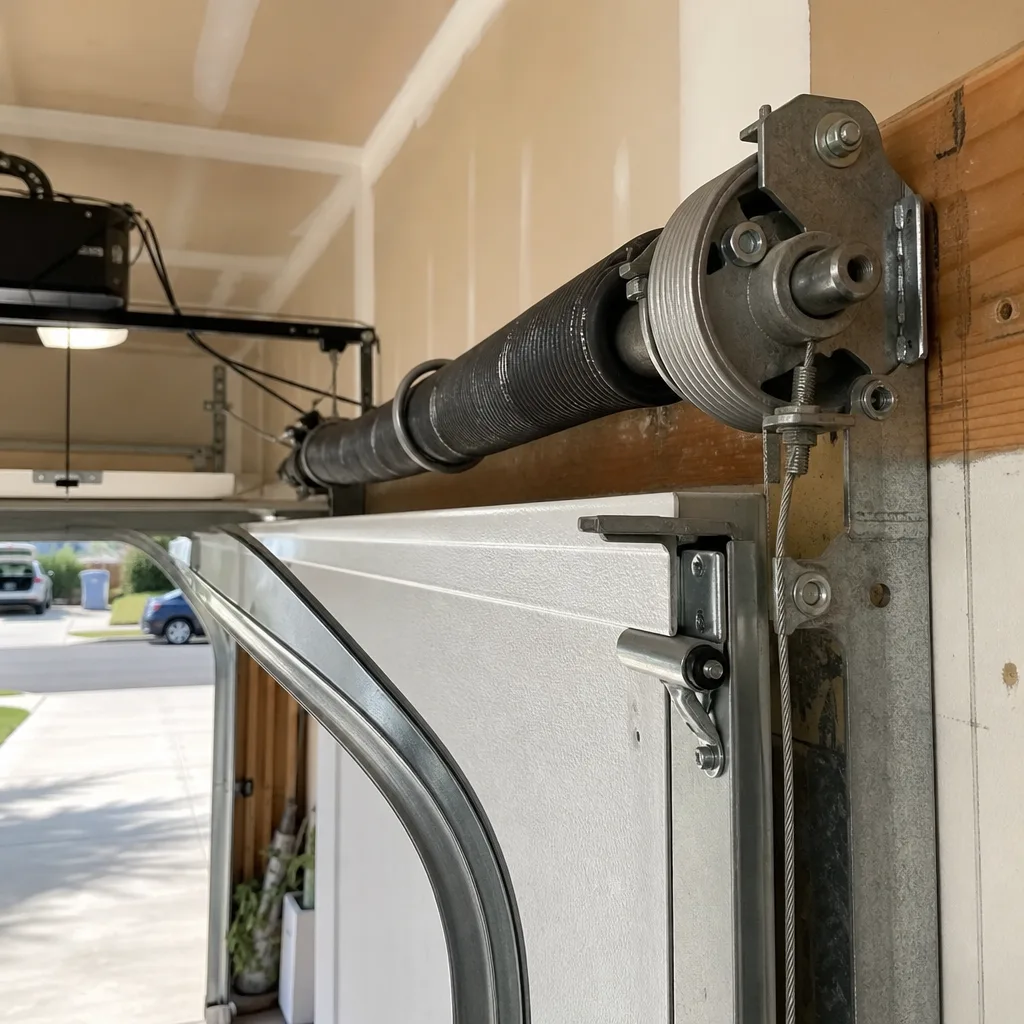 After
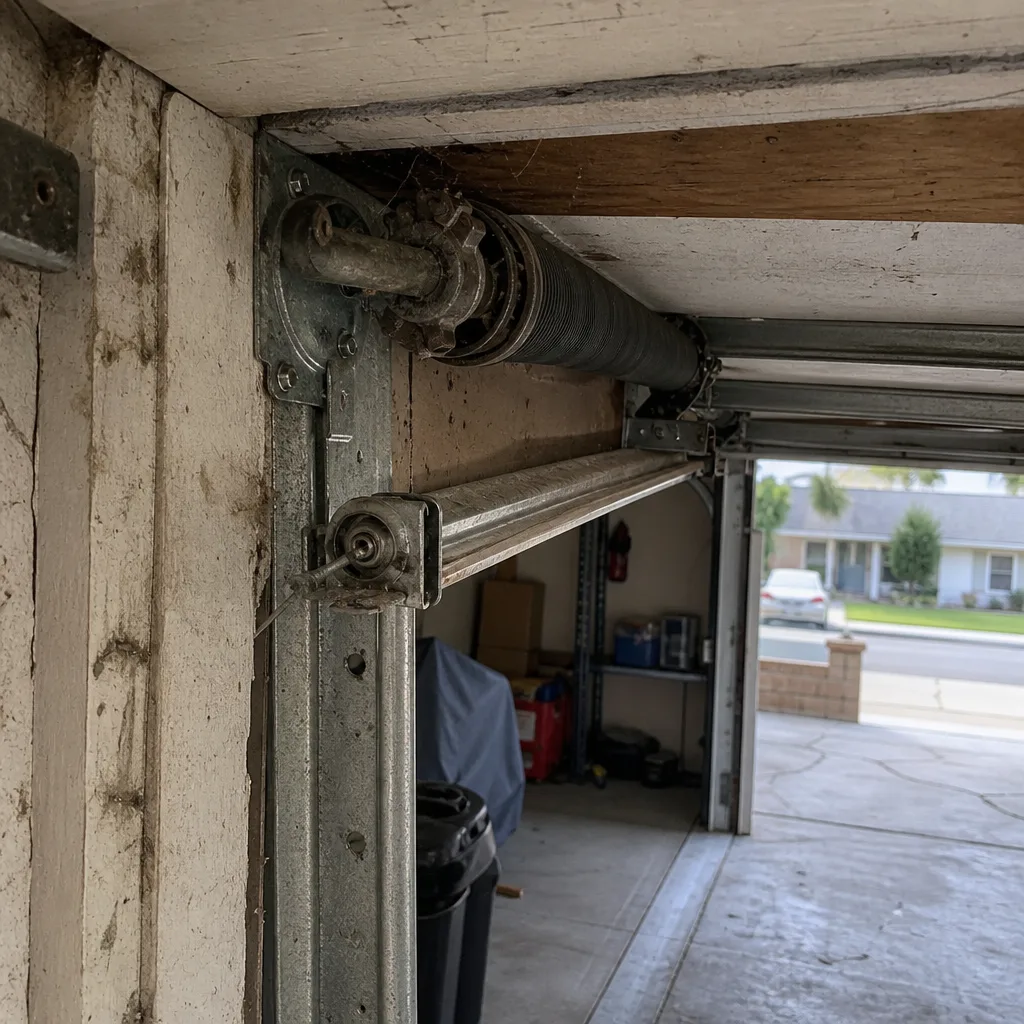 Before
 After
 Before
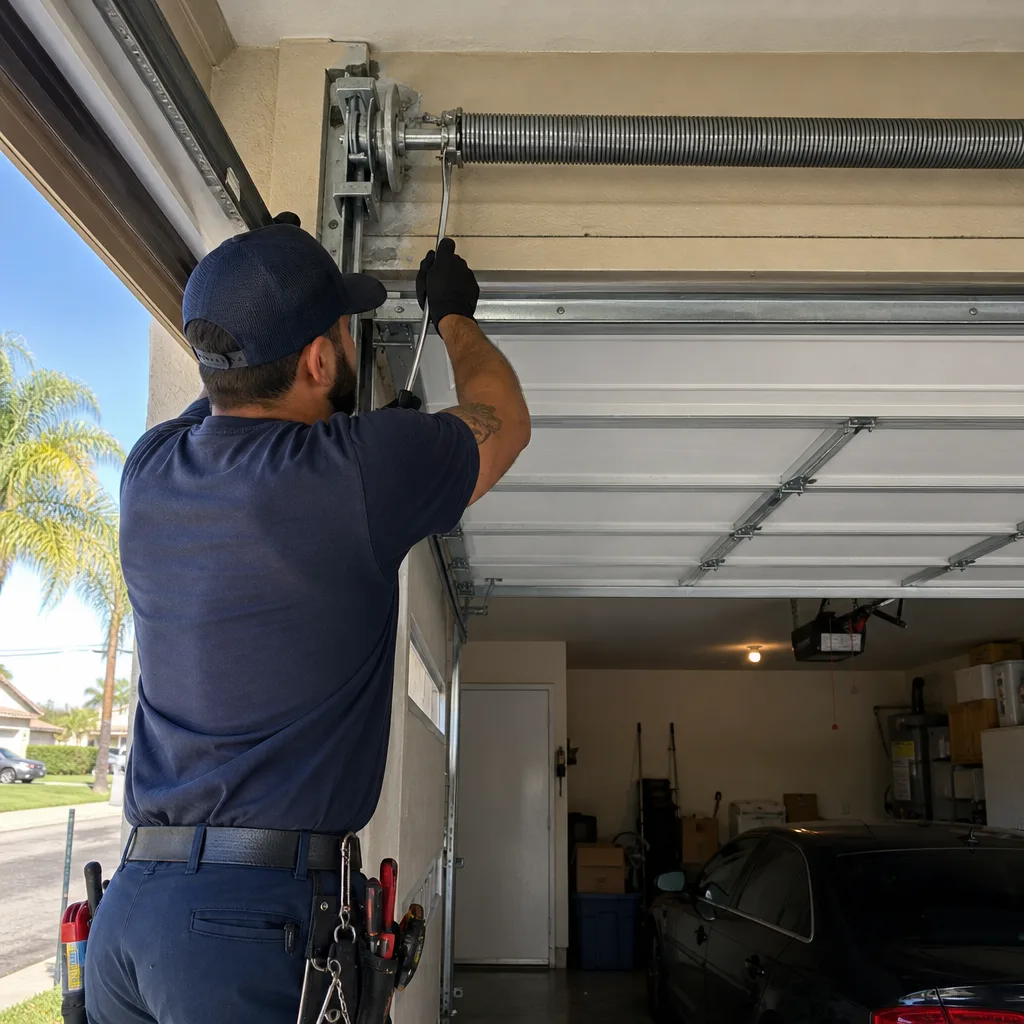 After
When to Call a Professional
Call a garage door specialist when the spring breaks, when the door comes off its track, when the opener stops lifting, or when the door is stuck open and you can’t close it manually. Those are the failures where the difference between a professional and a brave amateur is a hospital visit or a stolen bicycle. We’re a single-trade shop: garage doors are all we do, from the spring to the smart opener. Porter Garage Door offers free estimates in Anaheim. Call (833) 589-5745 and tell us what the door is doing, not what you think is broken. We’ll take it from there.
Frequently Asked Questions
Emergency garage door repair in Anaheim typically runs $180 to $450 depending on the failure, with spring replacement being the most common emergency at $200 to $350 including parts and labor. Before any major work, check Garage Door Permits, Codes & Inspections in CA: What You Need to Know to see if your project requires a permit. Track realignment and opener replacement cost more. Porter Garage Door quotes the price before any work starts, so the number you hear is the number you pay. Call (833) 589-5745 for an exact quote.
Yes, for most emergencies in Anaheim we provide same-day service, especially for broken springs, derailed doors, and openers that have failed. We carry parts for LiftMaster, Chamberlain, Genie, Clopay, and other major brands on the truck, which cuts down return trips. Call (833) 589-5745 and describe the problem.
Check the door from outside for level alignment, look at both vertical tracks for gaps, inspect the springs for breaks, and run the opener once from outside the garage while listening for grinding. If anything looks off, operate the door manually or not at all, and call for an inspection before using it daily.
No. Porter Garage Door quotes the repair price before work begins, based on what you tell us on the phone and what we confirm when we arrive. If we find additional problems, we’ll tell you before we do anything else and get your approval. No surprise invoices.
Yes. We stock parts for LiftMaster, Chamberlain, Genie, Clopay, Amarr, Wayne Dalton, Craftsman, and Raynor. Knowing your opener and door brand when you call lets us load the right inventory before we leave, which is how we complete most repairs in one visit.
For most Anaheim homeowners, yes. Santa Ana wind outages are frequent enough that a backup pays for itself the first time you get home after a power shutoff and can still open the garage. Look for a unit with 20 to 30 rated cycles, audible alerts, and compatibility with your existing opener. We install battery backup openers as part of our garage door installation in Anaheim service.
The Bottom Line
Garage door emergencies in Anaheim fall into three buckets: earthquake damage, power outage failures, and security failures when the door won’t close. Each has a specific protocol. Know how to use the manual release without dropping the door. Inspect the tracks and springs after every quake you can feel. Secure an open door before you go to bed, even if it means parking a car against the opening. And when the spring breaks or the track derails, call a specialist who works on the brand in your garage, not a generalist who’ll guess. Porter’s opener repair and garage door repair teams handle Anaheim emergencies with the right parts and the right training. Call (833) 589-5745 when you need us.
Written by the team at Porter Garage Door, serving Anaheim since 2015.