Last updated October 30, 2026
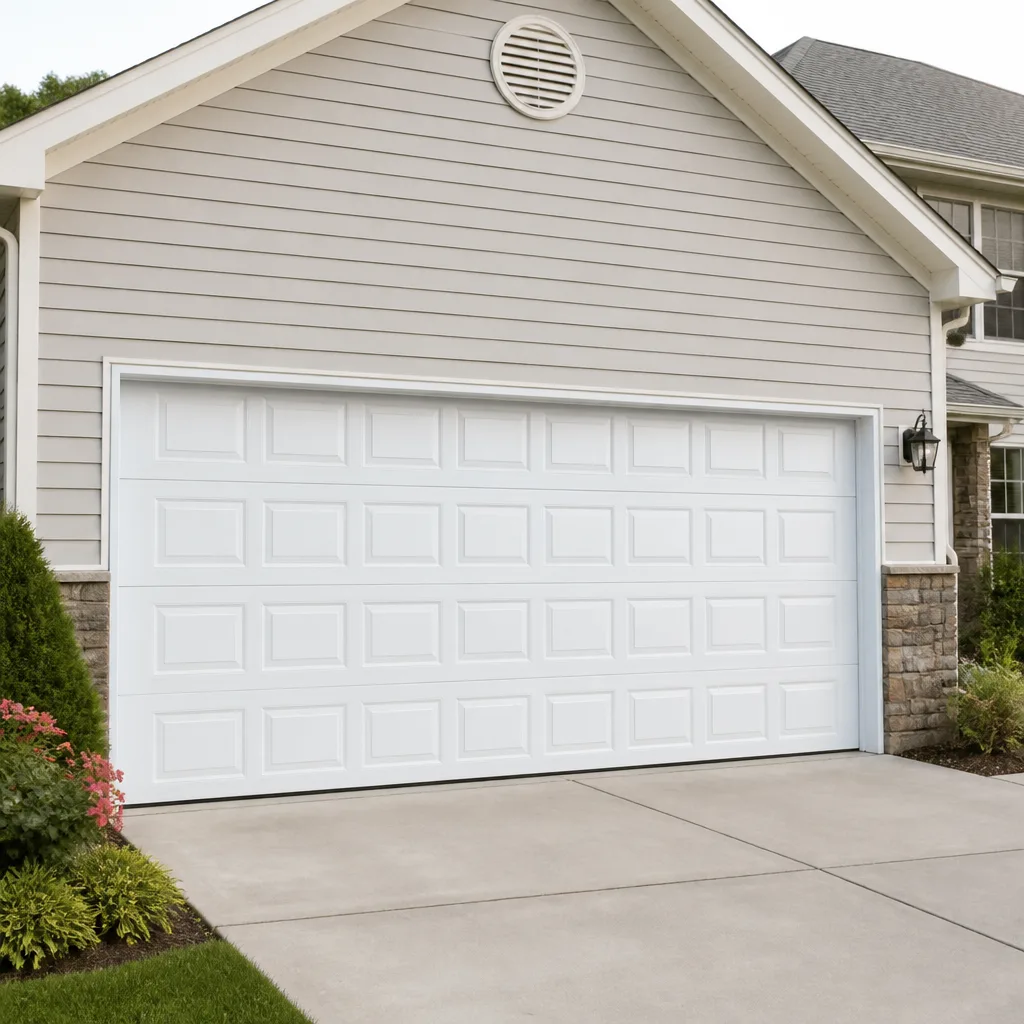 Raised-panel steel
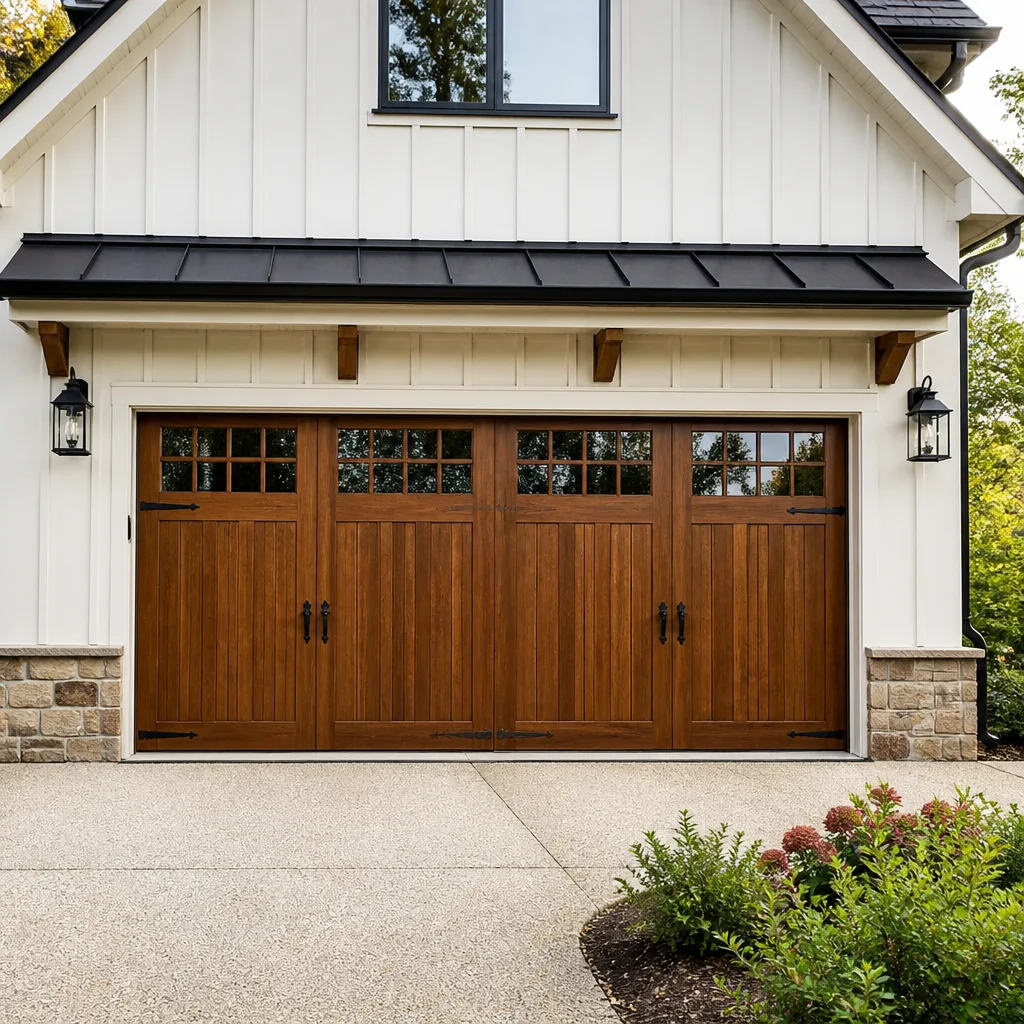 Carriage house
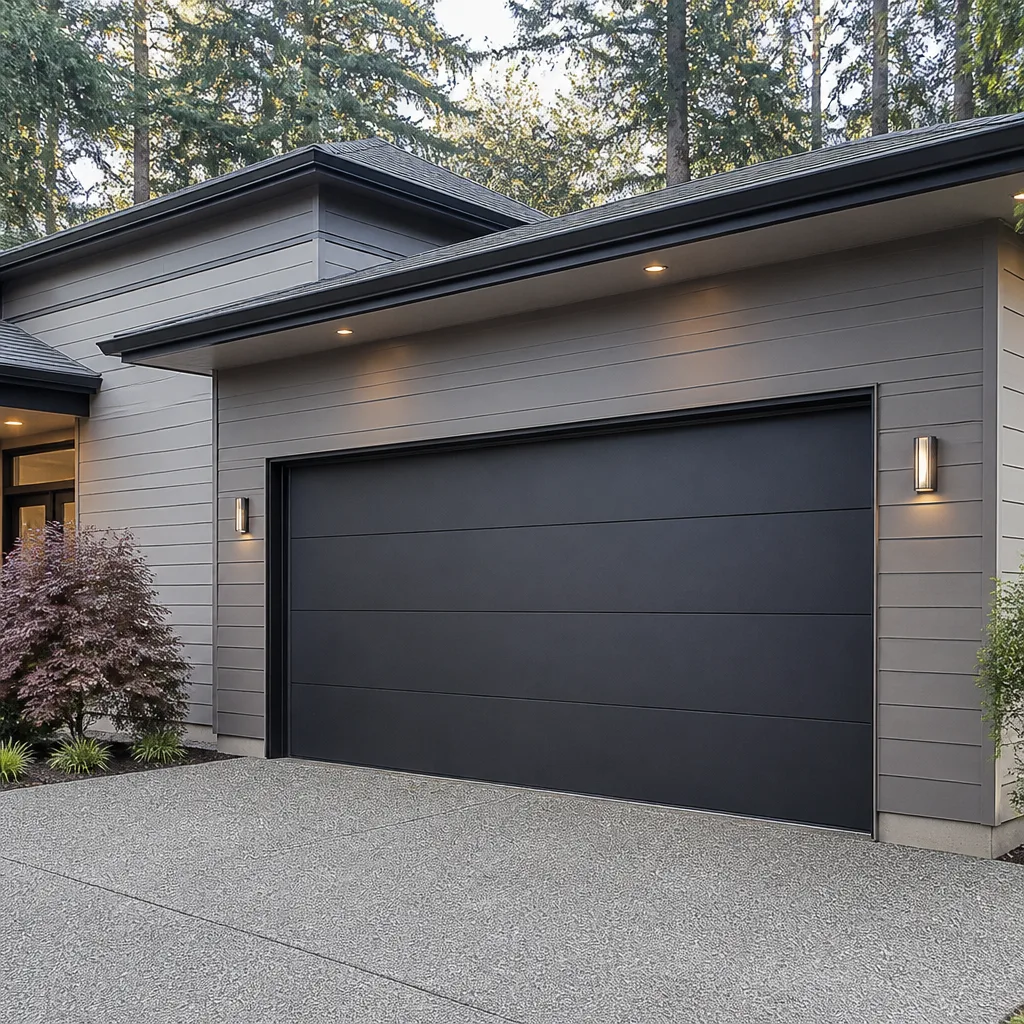 Modern flush
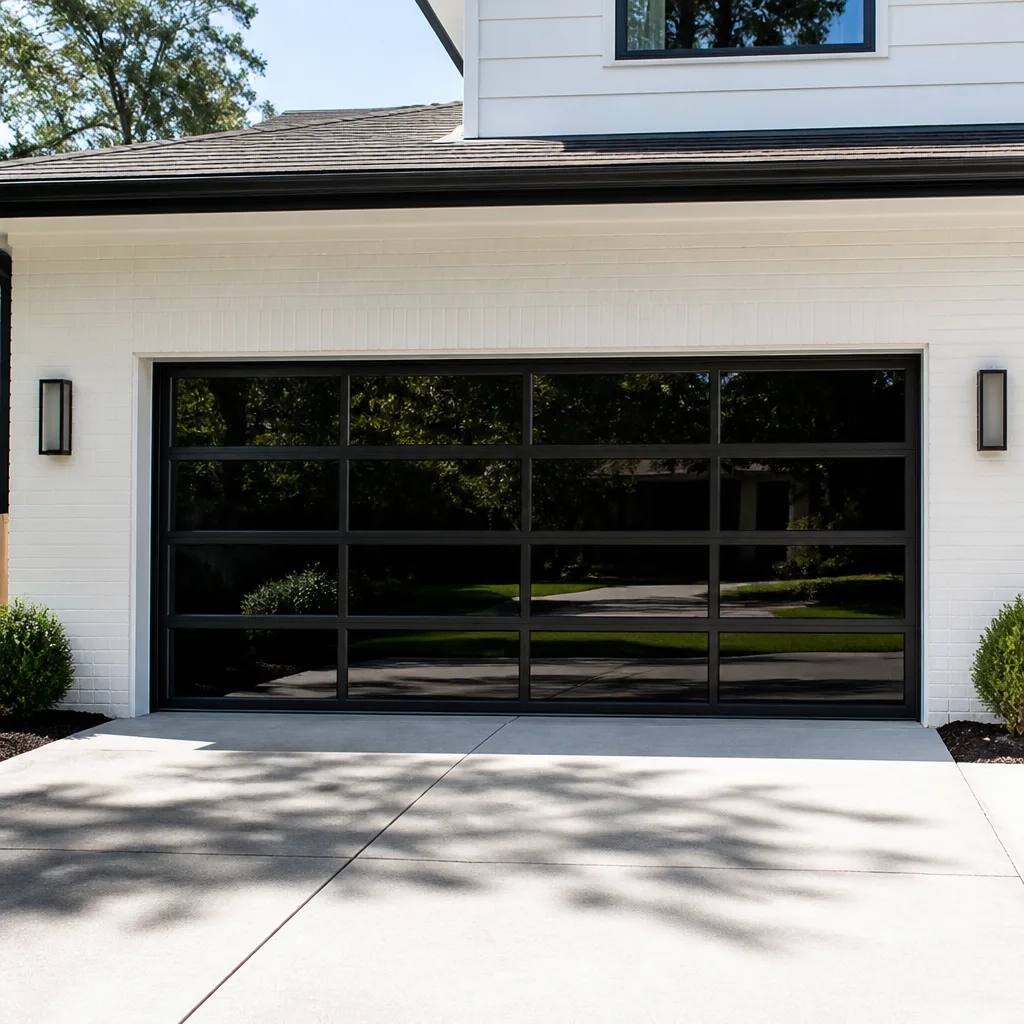 Full-view glass
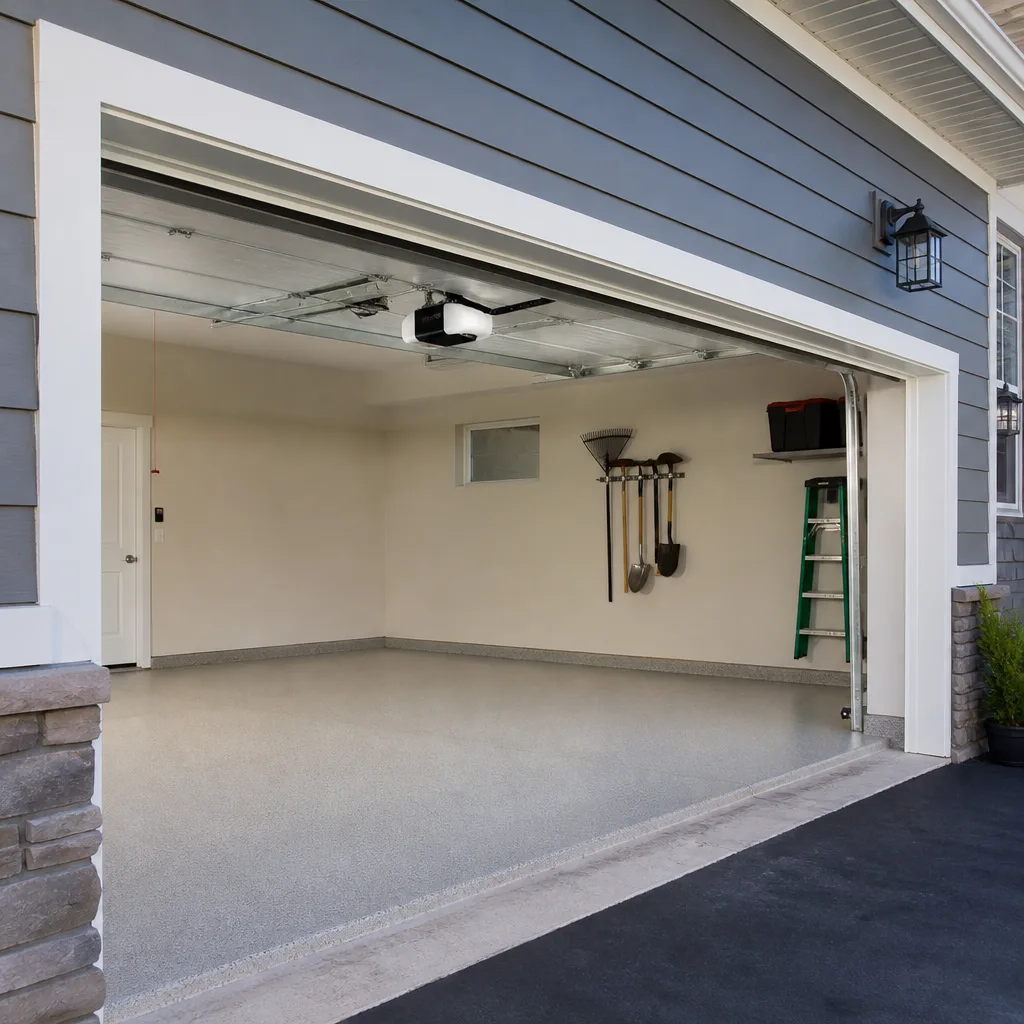 LiftMaster openers
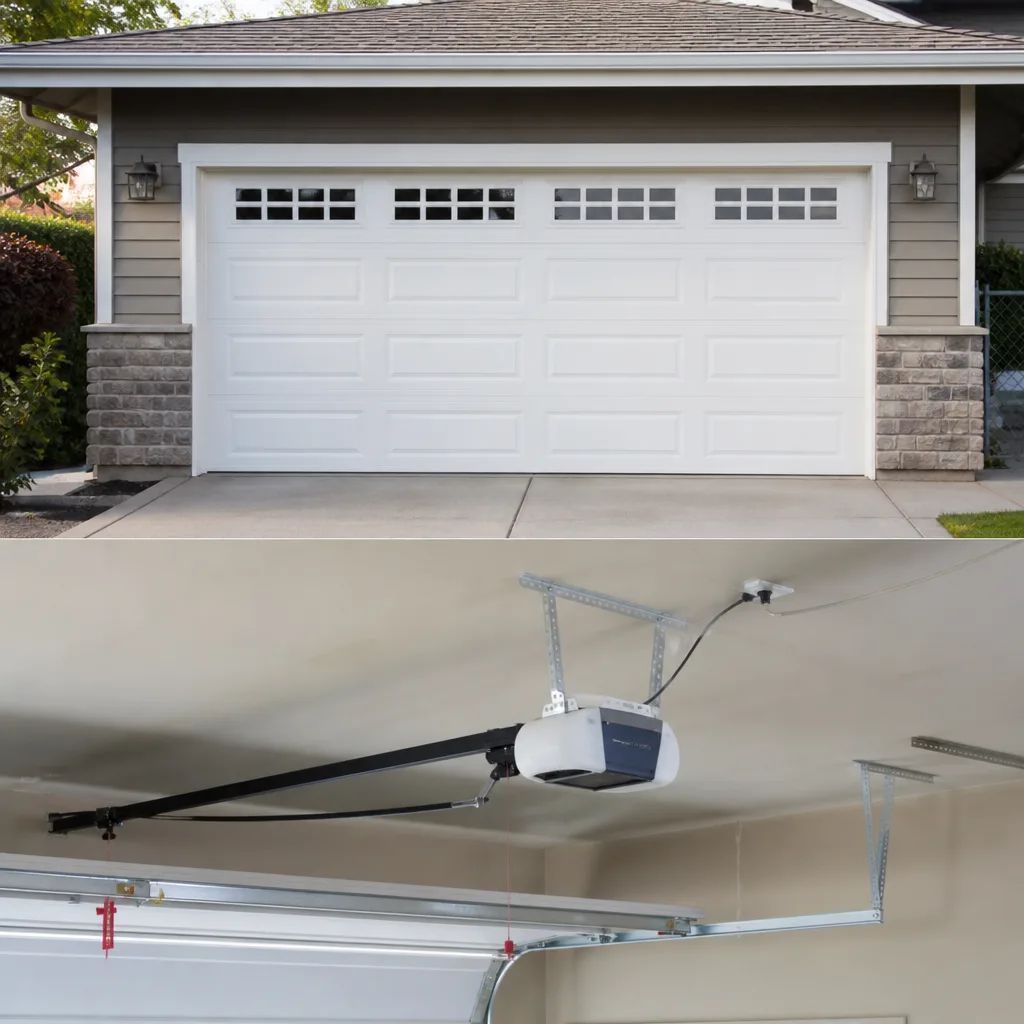 Chamberlain openers
Full 25-point door and opener safety check with every visit - springs, cables, rollers, tracks, and your LiftMaster or Chamberlain opener included
You get a price before we start. It does not change when the truck arrives.
Get your free estimateGarage Door Warning Signs: A Anaheim Homeowner’s Reference Guide
A garage door doesn’t usually fail without warning. Homeowners just don’t know what the warnings sound like. That grinding noise on Tuesday, the slight hesitation on Thursday, the door sitting a half-inch off the floor on Sunday morning – each one is the door telling you something specific. In Anaheim, where garage doors cycle thousands of times a year in heat, coastal humidity drift, and the occasional Santa Ana wind gust, these warning signs show up earlier than they do in milder climates. This guide decodes what your garage door is saying, so you can catch a $60 fix before it becomes a $600 emergency, and you can find more guides & resources on our blog. You’ll learn what each sound means at the component level, which visual symptoms point to which hardware failure, and the three signs that mean stop using the door immediately.
Quick Answer
The most common garage door warning signs in Anaheim are grinding or popping sounds (spring or roller failure), a door that sits uneven or sags when open (cable or spring imbalance), slow or delayed opener response (logic board or capacitor wear), and visible gaps between the door and the floor or frame (track misalignment or panel warping). Any grinding sound paired with a door that won’t lift, or a visibly broken spring, means stop using the door and call a technician same day. Most other symptoms can wait 48 to 72 hours if you manually open the door carefully.
Styles & brands we work with
Table of Contents
- An Audio Guide to Garage Door Sounds: What Grinding, Popping, Squealing, and Thudding Actually Mean
- Visual Symptoms on the Door Itself: Gaps, Sag, and Uneven Reveal
- Opener Behavior Changes: Slow Response, Reversing, and Partial Opening Decoded
- Three Warning Signs That Mean Stop Using the Door Immediately
- How to Document and Describe Symptoms for an Accurate Phone Quote
- Anaheim-Specific Factors That Accelerate Garage Door Wear
- Common Mistakes to Avoid
- When to Call a Professional
- Frequently Asked Questions
An Audio Guide to Garage Door Sounds: What Grinding, Popping, Squealing, and Thudding Actually Mean
Your garage door speaks in a small vocabulary of sounds, and each one maps to a specific component. Anaheim homeowners who learn this vocabulary catch failures early. Those who ignore it end up with a door that won’t open on a Monday morning.
Grinding is the sound of metal dragging against metal without lubrication, or a roller bearing that has seized and is now being dragged along the track. On a LiftMaster or Chamberlain system, grinding from the opener head usually means the drive gear has worn its teeth down. On the door itself, grinding points to rollers that have run dry. In our experience with doors across Anaheim, grinding resolved early is a roller or gear replacement under $200. Grinding ignored turns into a burned-out opener motor or a derailed door.
Popping is the sound of a torsion spring winding or unwinding unevenly. Torsion springs are under enormous tension, and a popping sound often means a spring is binding on the shaft or beginning to fatigue. On Clopay and Amarr doors with two-spring systems, a single pop followed by the door lifting unevenly means one spring has started to fail. That’s a same-week repair, not a same-month one.
Squealing is almost always a lubrication issue, but the location matters. Squealing from the rollers means the bearings inside the roller are dry. Squealing from the spring area means the coils are rubbing against each other or against the shaft. A quick silicone-based lube on a Genie or Raynor door clears most squeals in ten minutes. If the squeal persists after lubrication, the roller bearings are shot.
Thudding is the sound of a door hitting the ground harder than it should, or a section of the door flexing as it moves. A consistent thud at the bottom of the cycle means the down-force setting on your opener is too high, or the spring tension is off. A thud mid-cycle usually means a panel joint is loose or a hinge is failing. On Wayne Dalton doors with lightweight panel construction, hinge failures announce themselves as a rhythmic thud.
Visual Symptoms on the Door Itself: Gaps, Sag, and Uneven Reveal
You don’t have to hear a problem to catch it. Some of the clearest garage door warning signs in Anaheim are visible the moment you look at the door. These are the symptoms that show up in photos when homeowners call us for a phone quote.
Uneven reveal means the gap between the bottom of the door and the floor is wider on one side than the other. When the door is closed, both bottom corners should touch the floor evenly. A quarter-inch gap on one side and flush on the other signals a cable that has stretched, a spring that has lost tension on one side, or a track that has shifted out of alignment. In Anaheim’s older neighborhoods like parts of West Anaheim where garage slabs have settled over decades, an uneven floor can exaggerate this, but the mechanism still needs checking.
Sag when open is one of the most useful diagnostic signs. Open the door halfway and look at it from inside the garage. If the top section droops or the door appears to bow, the springs are not counterbalancing the door’s weight correctly. A properly balanced door stays put at the halfway point when you release it. One that creeps down or up has a spring tension problem. On eight-brand systems from LiftMaster to Raynor, this test works the same way because it tests the door, not the opener.
Gaps between panels or between the door and the frame let daylight through, and in Anaheim that means heat and dust intrusion in summer. Gaps at the panel joints mean the hinges are wearing or the panels themselves are warping. Anaheim’s dry heat cycle, hot days followed by cool nights, causes metal and composite panels to expand and contract repeatedly. Over years, that cycle loosens hinge fasteners and can warp lower-grade panels.
Rust or corrosion at the bottom panel is common in Anaheim homes within a few miles of the coast or near irrigation overspray. The bottom panel sits closest to ground moisture and fails first. Surface rust is cosmetic. Rust that has pitted the panel or eaten through the bottom seal channel means the panel structure is compromised.
Opener Behavior Changes: Slow Response, Reversing, and Partial Opening Decoded
The opener is the brain of the system, and changes in how it behaves are warning signs that something is wrong either in the opener itself or in the door it’s trying to lift. Anaheim homeowners who pay attention to these behavior shifts catch opener problems before they strand a car in the driveway.
Slow response means a delay between pressing the remote or wall button and the opener starting to move. On a LiftMaster or Chamberlain opener, a two-to-three-second delay that wasn’t there before often points to a failing capacitor on the logic board, or a remote battery that’s weak but not dead. A delay that’s consistent across both the remote and wall button narrows it to the opener’s control board.
Reversing mid-cycle is the door going up, stopping, and coming back down without reaching the top. This is a safety-protection behavior, and it’s usually triggered by one of two things: the door is hitting resistance that the opener interprets as an obstruction, or the force settings have drifted too low for the door’s actual weight. Resistance at a specific point in the travel often means a roller is binding or a track has a flat spot.
Partial opening is the door stopping six inches, a foot, or two feet up and refusing to go further. On Genie openers with screw-drive mechanisms, partial opening that happens only in hot weather can indicate thermal overload protection kicking in on a tired motor. On belt-drive LiftMaster units, partial opening often points to a broken or slipping gear inside the opener head.
Opener runs but door doesn’t move is a distinct symptom. The motor hums or runs and the door stays put. On belt-drive and chain-drive systems, that’s a stripped gear or a disconnected carriage. On any door, it can also mean the spring has failed and the opener is now trying to dead-lift the full weight of the door, which it cannot do. That last scenario is exactly why a broken spring should never be bypassed by forcing the opener to run.
Three Warning Signs That Mean Stop Using the Door Immediately
Most garage door warnings give you time. These three do not. If you see or hear any of the following, stop cycling the door and call a technician same day. Continuing to use the door in these states risks injury, further damage, or a door coming off its tracks entirely.
1. A Visibly Broken Torsion Spring
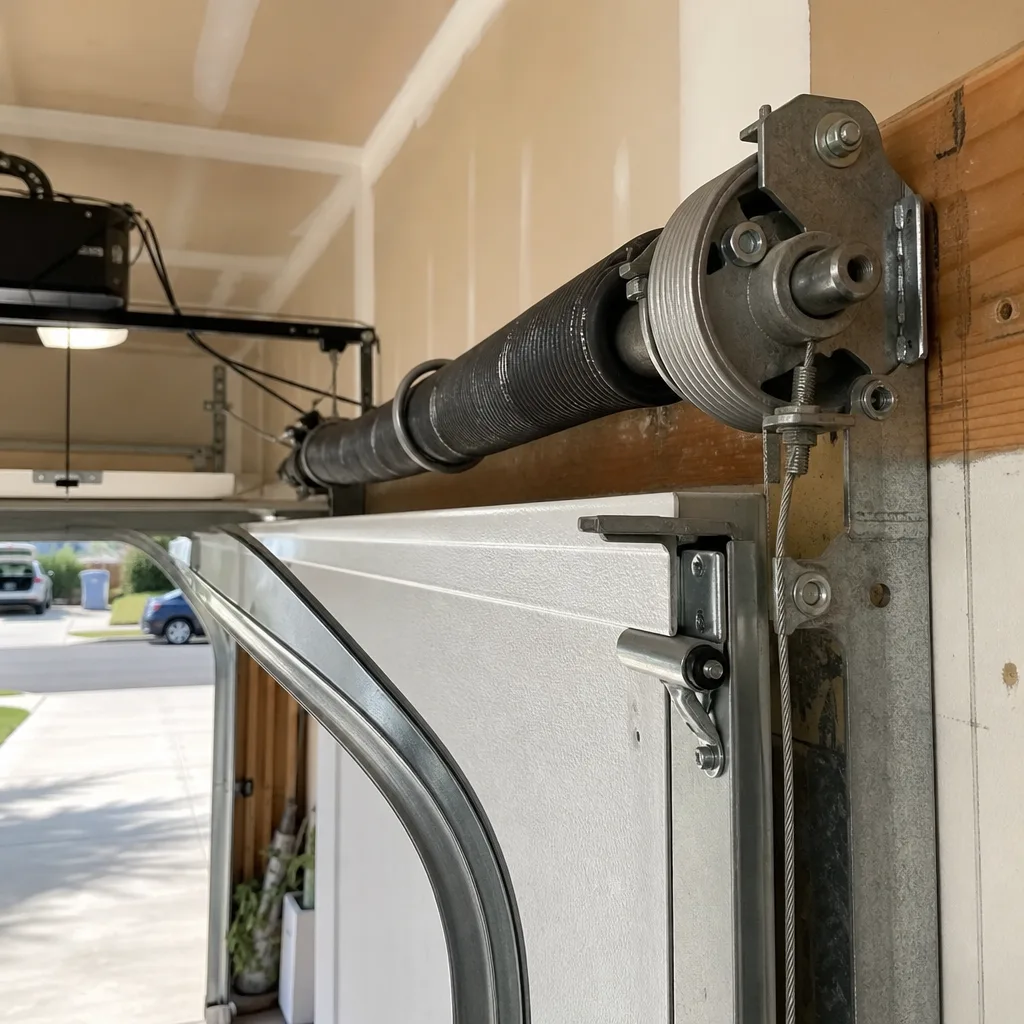
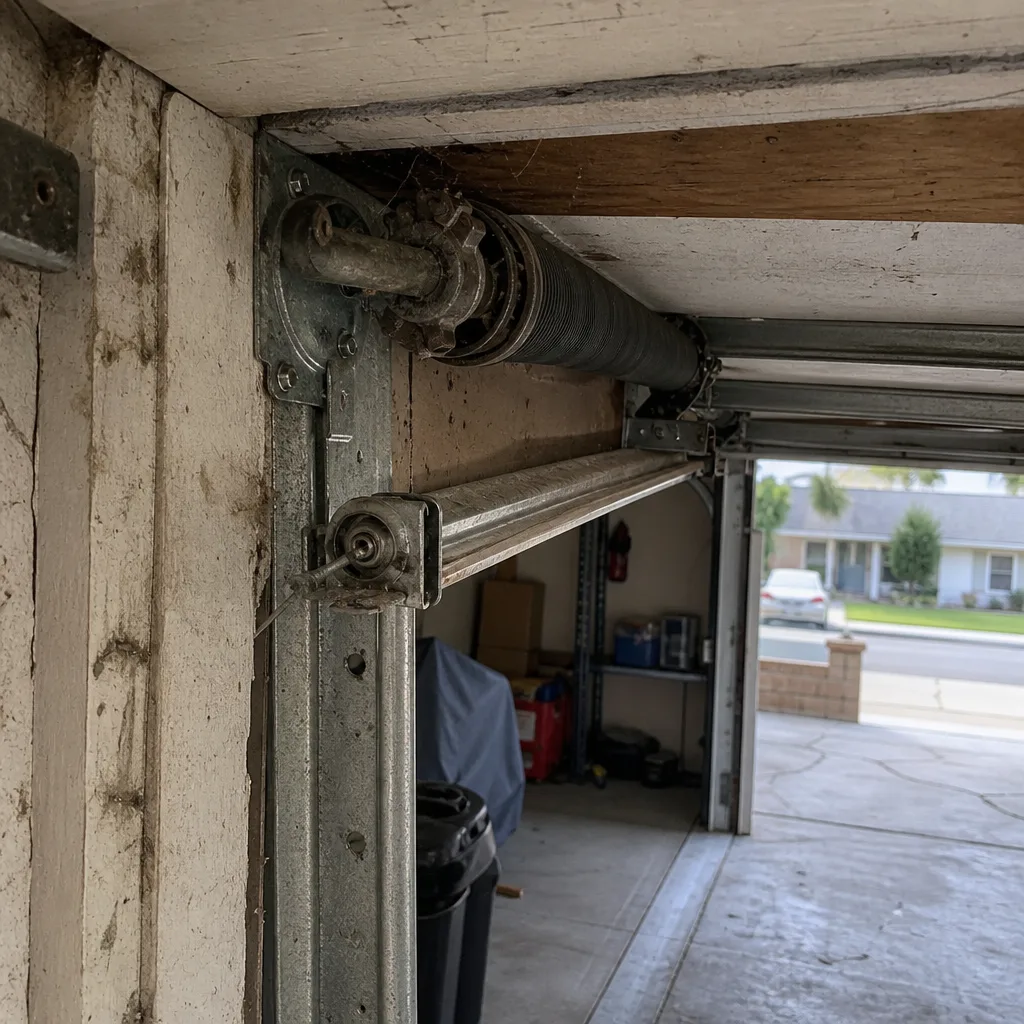
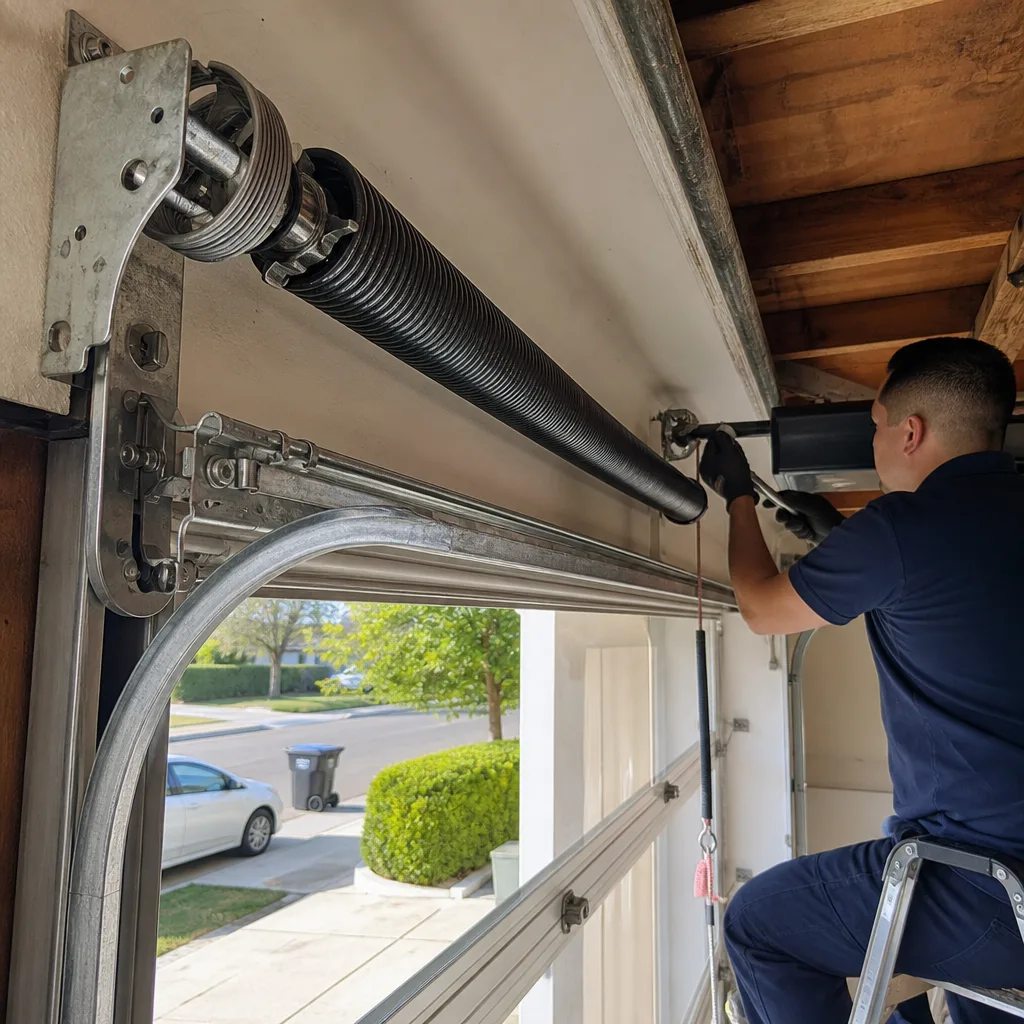
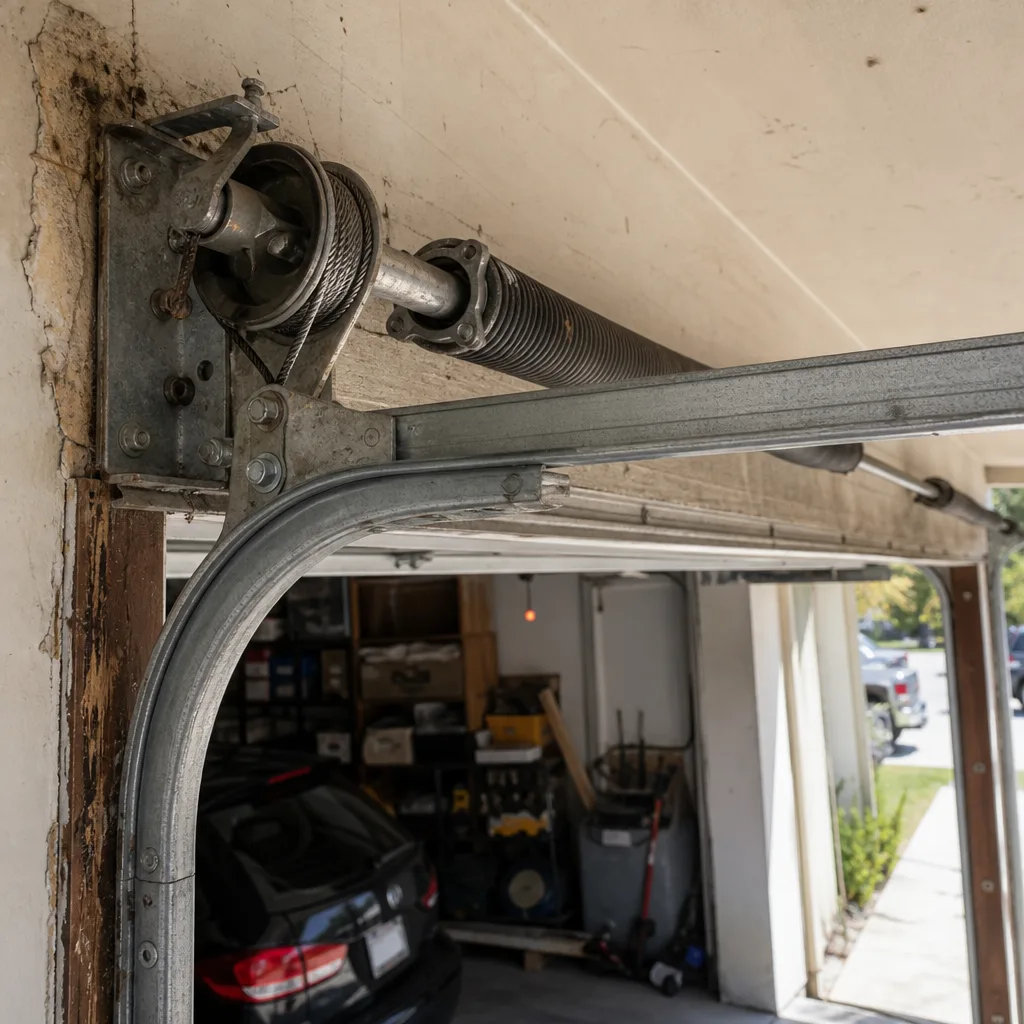
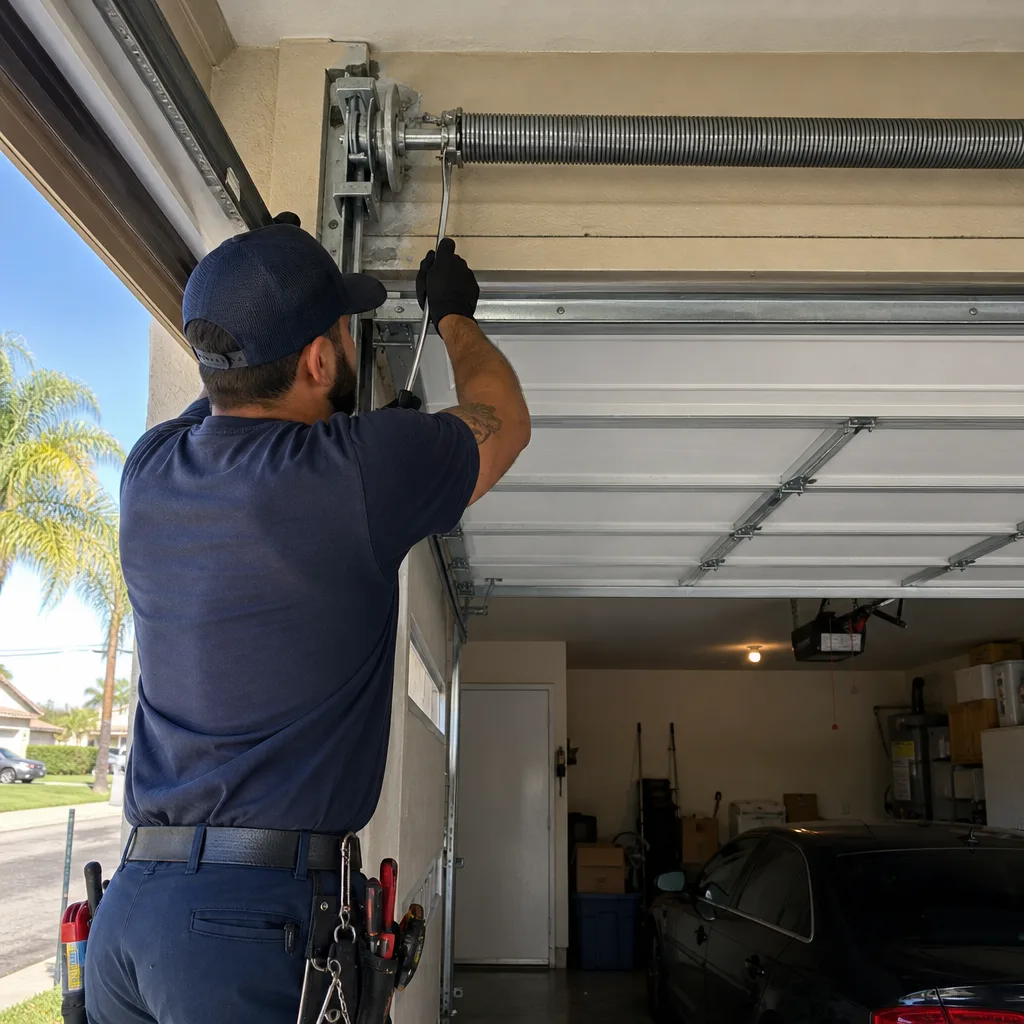
Torsion springs sit on the metal shaft above the door opening. When one breaks, you’ll see a two-to-three-inch gap in the coil where the spring has snapped. The sound is often a loud bang like a firecracker. The door will not lift safely with a broken spring. The opener is not designed to lift the full weight of the door, and forcing it will burn out the opener motor or pull the door off its tracks. This is the single most common emergency we address with Garage Door Repair in Anaheim, and it’s never a safe DIY job because the remaining spring is still under lethal tension.
2. A Cable That Has Come Off the Drum
Look at the top corners of the door on the inside. Each side has a cable that wraps around a grooved drum. If one cable is slack, unwound, or hanging loose, the door is now balanced on a single cable. Every cycle you put on it risks pulling the door crooked, bending the track, or dropping the door. A door with a loose cable should be left alone until a technician can reset the cable and re-check the spring tension.
3. Grinding Paired with a Door That Won’t Lift
A grinding sound alone is a repair-soon signal. Grinding paired with failure to lift is a stop-now signal. That combination usually means a seized roller, a derailed track, or an opener gear that has stripped while under load. Every attempt to cycle the door compounds the damage.
How to Document and Describe Symptoms for an Accurate Phone Quote
The better you describe the symptom, the more accurate your phone quote will be. When a homeowner calls us with “it’s making a noise,” we have to ask six questions before we can start narrowing the problem. When a homeowner calls and says “it grinds on the way up, pauses at the halfway point, and the right side hangs lower than the left when closed,” we can usually identify the likely failure before the truck rolls.
Step-by-Step: Documenting Your Garage Door Problem
- Note when the symptom happens. Is it on the way up, on the way down, or at a specific point in the travel? A sound that happens only at the bottom of the cycle points to different components than a sound that happens only at the top.
- Identify the sound type. Use the vocabulary from this guide: grinding, popping, squealing, thudding, rattling, or humming. Record a 10-second video with your phone if you can. Audio plus visual helps a technician prep the right parts.
- Check the door’s visual state. Open it halfway and step back. Is it level? Are both cables taut? Is there a visible gap in a spring? Take a photo of anything that looks off.
- Test the opener separately. Pull the emergency release cord and try to lift the door manually. If it’s hard to lift, the springs are weak or broken. If it lifts easily but the opener won’t move it, the problem is in the opener. This single test splits the diagnosis in half.
- Note the brand. Look at the opener motor housing and the door’s bottom panel. Knowing you have a LiftMaster opener on a Clopay door versus a Genie on a Wayne Dalton helps us bring the right parts. We work on the brand already in your garage, across eight major manufacturers, and brand-specific diagnosis reduces parts delays.
When you call, lead with the sound and the visual. “Grinding on the way up, door sags at the halfway point” gets a better quote than “it’s broken.” A good technician will still confirm everything on site, but a well-documented symptom means clearer expectations and fewer surprises on the invoice.
Anaheim-Specific Factors That Accelerate Garage Door Wear
Garage doors wear out faster in Anaheim than in many other parts of Southern California, and the reasons are specific to this city’s geography and climate patterns. Understanding them helps you anticipate problems before they show up.
Anaheim sits in a heat pocket. Summer daytime temperatures regularly reach the high 80s and 90s, and garage interiors run 15 to 20 degrees hotter than outside. That heat accelerates the breakdown of lubricants on rollers, hinges, and springs. A roller that might run quietly for eight years in a coastal climate can start grinding at year five in Anaheim’s summer heat. Re-lubricating your rollers and springs twice a year, once in spring and once in fall, is the cheapest preventive maintenance an Anaheim homeowner can do; see our Seasonal Garage Door Care for Anaheim: Year-Round Homeowner’s Guide for the full schedule.
The Santa Ana wind season brings its own pressure on door hardware. Gusts push directly against a closed garage door, cycling force through the tracks, hinges, and spring system. Over years, those repeated pressure cycles loosen track bolts and stress hinge fasteners. After a strong Santa Ana event, it’s worth doing a visual check: listen for new rattles, look for loose bolts on the track brackets, and confirm the door still closes flush.
Finally, Anaheim’s housing stock spans every era from mid-century to new construction, and each era has its typical failure profile. Homes in older neighborhoods often have original steel doors from the 1980s or 1990s with springs nearing end of life. Newer builds in the Platinum Triangle area often have lightweight composite doors with smart openers, where the failure is more likely to be a logic board or sensor issue than a mechanical spring break. Knowing your home’s era tells you which warning signs to watch first.
Common Mistakes to Avoid
- Lubricating a grinding door without diagnosing the grind first. Lubrication quiets a dry roller but does nothing for a seized bearing or a stripped gear. If the grind continues after proper lubrication, you’ve masked the symptom without fixing the cause.
- Adjusting the opener force settings to “fix” a door that’s hard to lift. If the door is hard to open manually, the springs are failing. Cranking up opener force forces the opener to work harder, which shortens its life and strains every component downstream.
- Ignoring a sag because “it still works.” A door that sags at the halfway point is using the opener to compensate for failing springs. Every cycle wears the opener’s gears and logic board faster. The spring job is cheaper if you catch it before the opener fails too.
- Using WD-40 on rollers and springs. WD-40 is a solvent, not a long-term lubricant. It strips away whatever grease is left and then evaporates, leaving metal drier than before. Use a white lithium grease on metal components and a silicone-based lubricant on nylon rollers and hinges.
- Replacing the opener when the real problem is the door. Slow response and partial opening are often door-weight problems, not opener problems. Replacing the opener fixes nothing if a broken spring is the root cause. A diagnostic check on both systems before spending on a new unit saves money.
- Waiting until the door won’t open to research a repair company. In an emergency, you call whoever can get there first, not whoever does the best work. Having a specialist’s number saved, one who knows your brand and carries the right parts, means your emergency call is also a well-informed one.
When to Call a Professional
Call a professional when the warning sign involves a spring, a cable, a track, or an opener that’s behaving unpredictably. These are the components under tension or load, and they are the ones where DIY attempts cause injury and compounding damage. In our experience, the brake-even point is simple: if the symptom involves a moving part under tension, it’s a professional repair. If it’s a lubrication issue you can reach with the door open and no tension on the springs, that’s a maintenance task. Garage doors are all we do, which means every diagnostic call we run in Anaheim is calibrated to this exact system, not split across plumbing or HVAC. We work on the brand already in your garage, from LiftMaster and Genie openers to Clopay, Amarr, and Wayne Dalton doors. Garage Door Opener Repair in Anaheim is one of our core in-house services, and we diagnose opener issues alongside door issues rather than treating them as separate mysteries. Porter Garage Door offers free estimates in Anaheim – call (833) 589-5745.
Frequently Asked Questions
Garage door spring replacement in Anaheim typically runs between $180 and $340 for a standard torsion spring pair on a single-car door, including parts and labor. The range accounts for spring size, cycle rating, and whether the technician needs to reset cables or bearings at the same time. We quote the exact price before any work starts, so you’re never surprised by the final number. Call (833) 589-5745 for a quote specific to your door.
A garage door can fall if a cable also fails or if the door is pulled off its tracks while a spring is broken. Torsion spring systems are designed so that one broken spring leaves the door heavy but still held by the cables. However, cycling the door repeatedly with a broken spring puts all the load on remaining components, and a cable failure can then allow the door to drop. This is why a visibly broken spring means stop using the door immediately.
Twice a year is the right interval for Anaheim’s climate: once in early spring before the heat builds and once in late fall after the Santa Ana season. Use white lithium grease on metal hinges and spring coils, and a silicone-based lubricant on nylon rollers and the opener rail. Do not use WD-40 as a lubricant.
A garage door that opens only partway in heat is usually hitting thermal overload protection on the opener motor, meaning the motor is running too hot and the logic board is cutting power to protect the windings. In Anaheim summers, garage interiors routinely exceed 100 degrees, and an aging opener motor with marginal cooling will trip its thermal sensor. The fix may be opener replacement, or it may be a door balance issue forcing the motor to work harder than it should. Either way, the diagnostic starts with a manual lift test.
We work on the brand already in your garage. That includes openers from LiftMaster, Chamberlain, Genie, and Raynor, and doors from Clopay, Amarr, Wayne Dalton, and Craftsman, among others. Eight-brand fluency means our technicians diagnose the specific hardware in front of them, not a generic door. If you’re replacing, we can also match you within the brand family you already know. See Garage Door Installation in Anaheim for options.
For spring breaks and other same-day emergencies, we prioritize Anaheim calls and aim for same-day dispatch whenever the schedule allows. For non-emergency symptoms like grinding, sag, or opener behavior changes, we typically schedule within 24 to 48 hours. The more clearly you describe the symptom when you call, the better we can prepare the right parts before the truck rolls. Call (833) 589-5745 and describe what you’re seeing and hearing.
The Bottom Line
Your garage door tells you when it’s failing. The grinding that means a dying roller, the sag that means a weakening spring, the slow response that means a tired opener logic board – none of these are mysteries once you know the vocabulary. In Anaheim, where heat and Santa Ana cycles accelerate wear, catching these signals early is the difference between a maintenance repair and a full-system replacement. Learn the sounds, watch the visual signs, and when a spring breaks or a cable comes off, stop using the door and call a specialist who knows the brand already in your garage. That’s the whole job: fast diagnosis, right parts, and an honest recommendation on whether to repair or replace. From the spring to the smart opener, Porter Garage Door home covers the entire system in Anaheim.
Written by the team at Porter Garage Door, serving Anaheim since 2015.
See the difference
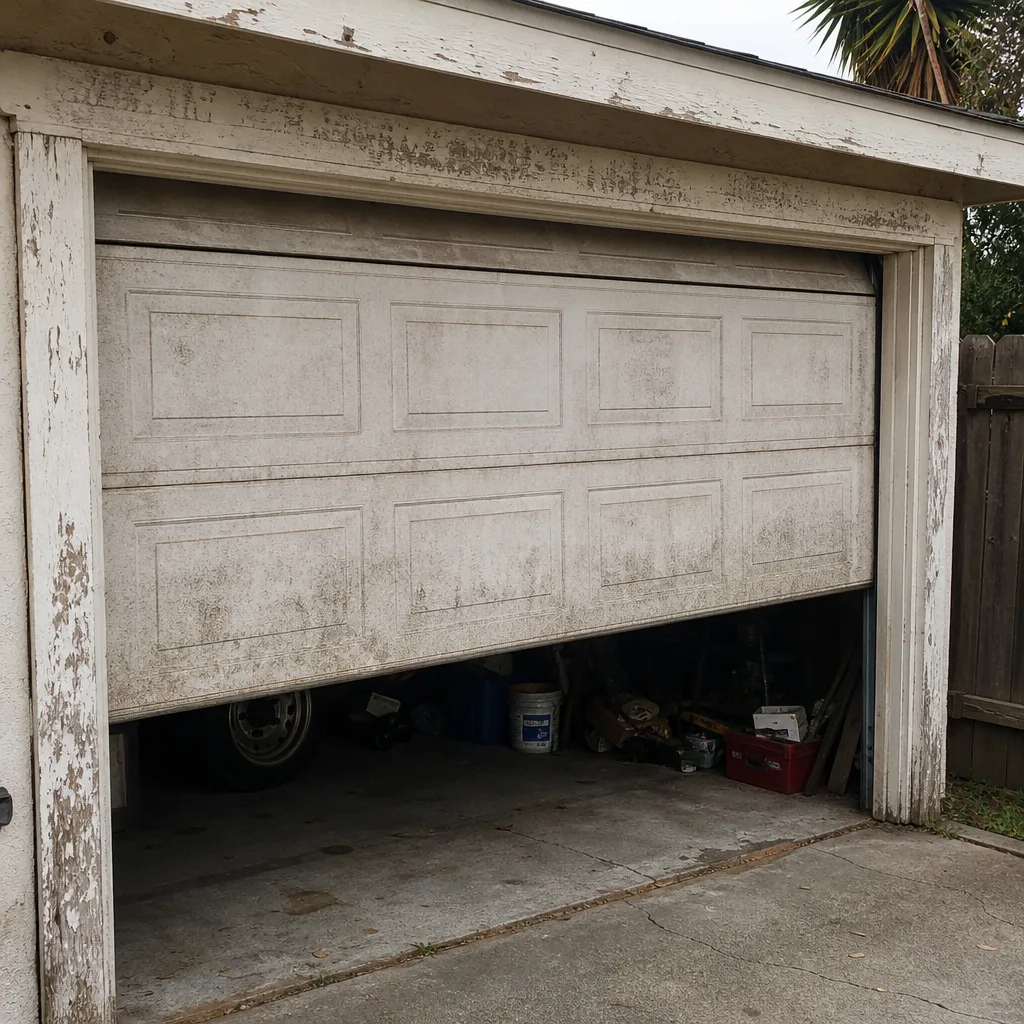 Before
 After
 Before
 After
 Before
 After